Infusion
5–10 flowers per cup of hot water, for 5–10 minutes. The colour develops within the first minutes. Drink up to 2–3 cups daily.

 Zoom
Medicinal & Therapeutic Herbs
Clitoria ternatea L.
Also known as: Butterfly pea, blue pea flower, Clitoria ternatea, blue tea, aparajita.
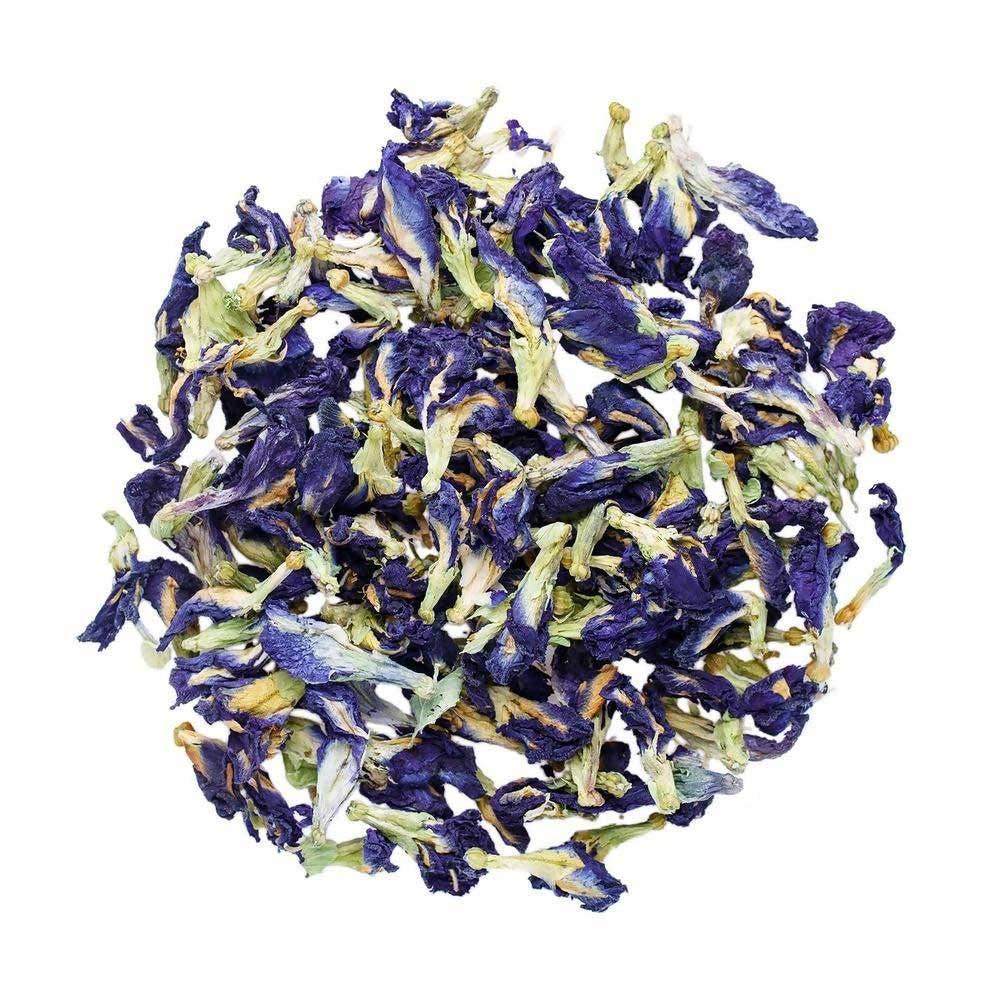
Butterfly pea is the blue flower of a tropical plant from Southeast Asia, here from Ceylon. The plant takes its name from the shape of its flowers, which resemble a butterfly with open wings.
Send us a message and we reply within one working day. Or call us on (+30) 2610 221354 during shop hours.
Send a message(+30) 2610 221354Butterfly pea is the blue flower of a tropical plant from Southeast Asia, here from Ceylon. The plant takes its name from the shape of its flowers, which resemble a butterfly with open wings. It appeals to anyone looking for a relaxing drink with a striking colour, and to anyone wanting a natural blue colourant for food and drink.
The flowers are characterised as antioxidant, anti-inflammatory, nootropic — that is, connected with cognitive function — and antiglycaemic. They contain flavonoids, tannins and alkaloids, and are particularly rich in anthocyanins. The anthocyanins account for both the deep blue colour and the antioxidant action, and are linked to brain health, vision and general wellbeing.
A distinctive feature of the drink is that the blue turns purple when an acidic ingredient is added, such as lemon or lime juice — anthocyanins shift shade according to acidity.
In traditional medicine the flowers are associated with anxiety and mood, with cognitive function and memory, with blood sugar regulation, with vision, and with protecting and supporting skin health in cosmetics.
As a herbal tea: the flowers steep in hot water and give an infusion with a vivid blue colour and a mild, earthy taste. It is enjoyed plain or blended with lemongrass or ginger, sweetened with honey and served hot or iced.
In culinary use the flowers colour rice dishes, desserts, cocktails and ice cream. They are also used as a natural dye for textiles, fibres and cosmetics: the pigment is extracted with hot water or alcohol.
5–10 flowers per cup of hot water, for 5–10 minutes. The colour develops within the first minutes. Drink up to 2–3 cups daily.
A few drops of lemon or lime turn the blue to purple. The reaction is immediate and comes from the change in acidity, not from any additive.
A concentrated infusion from more flowers in less water is used as a natural colourant in rice, doughs, desserts and drinks.
Quantities are indicative, based on traditional use and published herbal literature. For prolonged use or if you are on medication, consult a health professional.
The flowers are generally considered safe for consumption, with a recommendation to use in moderation. Large amounts are reported to cause nausea and stomach discomfort. Because of the antiglycaemic action, monitoring is needed alongside antidiabetic medication. There is insufficient data for pregnancy and breastfeeding, so use is limited to occasional. The plant belongs to the legume family: caution with a known allergy to pulses. The seeds of the plant are not consumed.
Because anthocyanins shift shade according to acidity. A few drops of lemon or lime turn the blue straight to purple, with no additive involved.
Five to ten flowers in hot water for five to ten minutes. The colour develops within the first minutes.
No. The taste is mild and earthy, which is why it is often blended with lemongrass or ginger and sweetened with honey.
Have you tried Butterfly pea blue tea flowers Ceylon 30 g? Tell us what you think.
1.25€50 g · 3 weights
3.30€50 g · 3 weights
3.47€50 g · 3 weights
2.90€50 g · 3 weights