 Greek Zoom
Medicinal & Therapeutic Herbs
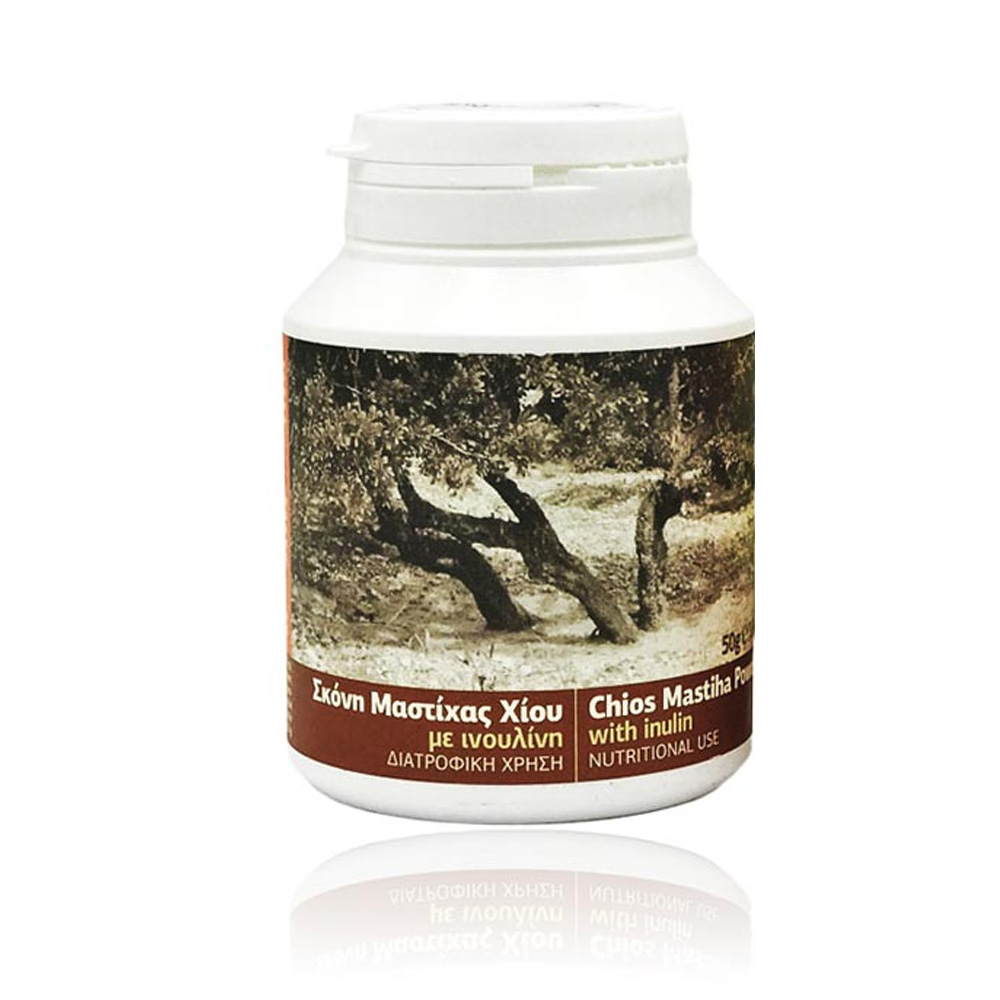
Chios Mastiha PDO powder with inulin 50 g
Also known as: Chios mastic with inulin, mastiha powder blend, mastiha Chiou, masticha.
Chios Mastiha PDO is a food-use powder blend with natural Chios mastic and chicory inulin. It is not a single-herb material, so the adapted structure focuses on composition, everyday use and tolerance of the combination.
Shipping options
- EU countries: DHL from €18 · free over €200 (first 2 kg, by volumetric weight)
- Cyprus: ACS, BOX NOW or DHL · free with ACS or BOX NOW over €99
- Greece: ACS or ELTA to your door from €4.00 · ACS or BOX NOW lockers from €2.40 · free over €49 (first 3 kg)
- Usually dispatched within 1–2 business days
Payment methods
- Card, Google Pay, Apple Pay, with no extra charge
- Cash on delivery (Cyprus and Greece): ACS +€2.50 · ELTA +€3.50
- IRIS or bank transfer (Greece only)
Send us a message and we reply within one working day. Or call us on (+30) 2610 221354 during shop hours.
Send a message(+30) 2610 221354What it is
Chios Mastiha PDO is a food-use powder blend with natural Chios mastic and chicory inulin. It is not a single-herb material, so the adapted structure focuses on composition, everyday use and tolerance of the combination.
Mastic resin is associated with stomach comfort, dyspepsia and research interest in Helicobacter pylori. Inulin is a soluble prebiotic fibre used as a substrate by beneficial gut bacteria and associated with regular bowel function.
Key properties
Digestive and gastroprotective. Mastic is used for stomach comfort, dyspepsia, heartburn, bloating and nausea.
Prebiotic. Inulin supports bifidobacteria and balance of intestinal flora.
Bowel-regulating. Soluble fibre relates to regularity but may initially increase gas in sensitive people.
Uses
The following references concern the two-ingredient combination while distinguishing mastic evidence from the role of inulin.
- Helicobacter pylori. Chios mastic has been examined in laboratory and clinical studies for activity against Helicobacter pylori, the bacterium associated with gastritis, dyspepsia and peptic ulcers.
- Gastritis and dyspepsia. Used in wellness applications for bloating, nausea, heaviness and retrosternal heartburn.
- Gastro-oesophageal reflux. Mastic is valued for complementary stomach comfort when heartburn and reflux are present.
- Gastric and duodenal ulcers. This use is presented in a traditional and research context, with medical assessment for persistent pain or black stools.
- Crohn disease. Mastic studies have examined inflammatory markers in mild to moderate activity. Use is only complementary alongside medical care.
- Diarrhoea and gut flora. Inulin feeds beneficial bacteria, while mastic has traditional use for digestive balance.
Preparation & dosage
For adults, mix ½ teaspoon daily into yoghurt, water or juice and take at least 30 minutes before a meal. Starting gradually helps assess tolerance to inulin.
Recorded use reports amounts up to 5 g daily for up to six months without reported adverse effects. The pack serving remains the primary practical instruction.
Amounts are indicative and are based on traditional use and published herbal literature. For prolonged use or when taking medication, consult a healthcare professional.
Precautions
Inulin may cause gas, bloating, cramps or diarrhoea, especially with irritable bowel syndrome or FODMAP sensitivity. Reduce the amount if discomfort occurs.
Seek professional advice during pregnancy, breastfeeding, Crohn disease, ulcer, persistent reflux or diabetes. After opening, keep refrigerated in a dry, cool environment.
Frequently asked questions
What does Chios Mastiha PDO contain?
It contains natural powdered Chios mastic and prebiotic inulin from chicory.
How is mastic powder with inulin taken?
Mix ½ teaspoon daily into yoghurt, water or juice at least 30 minutes before a meal.
Why can it cause bloating?
Inulin is fermented by gut bacteria and may initially increase gas and bloating in sensitive people.
- European Medicines Agency. Final European Union herbal monograph on Pistacia lentiscus L., resina (mastic).
Reviews
Have you tried Chios Mastiha PDO powder with inulin 50 g? Tell us what you think.
You may also like
Organic ground Ceylon cinnamon
1.56€50 g · 3 weights
Artichoke, osmotic dried, no added sugar
3.00€100 g · 2 weights