Aromatic use
Place a very small amount in a suitable incense burner with good ventilation and avoid direct smoke inhalation.

 Zoom
Medicinal & Therapeutic Herbs
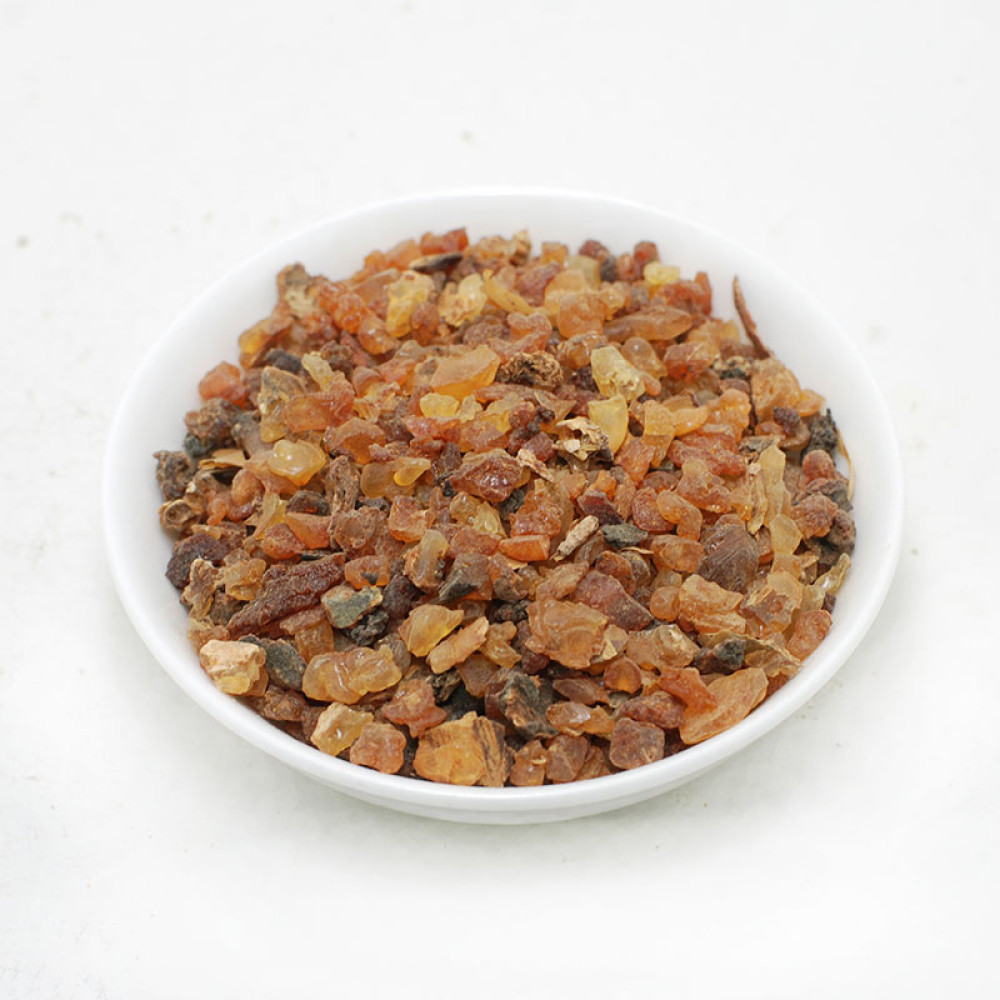
Commiphora myrrha (Nees) Engl. (syn. Commiphora molmol Engl.)
Also known as: myrrh, gum myrrh.
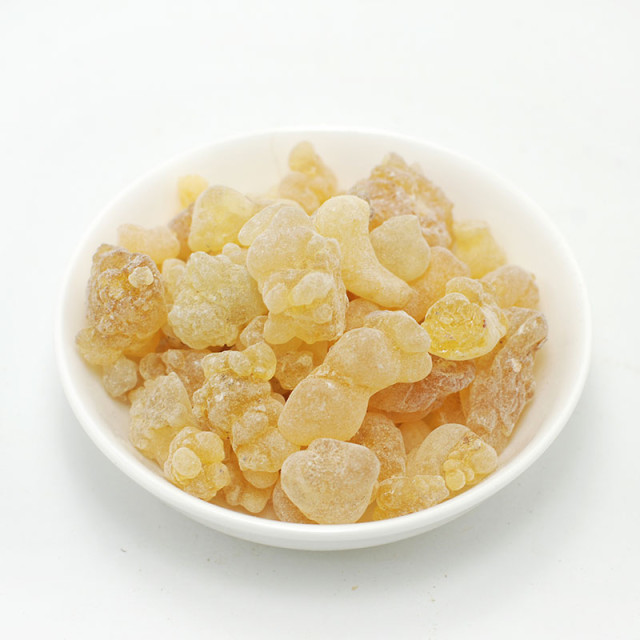
An aromatic resin with a warm, bitter and balsamic scent. Myrrh has a long history in perfumery, ritual incense and suitable preparations for oral care and topical care.
Send us a message and we reply within one working day. Or call us on (+30) 2610 221354 during shop hours.
Send a message(+30) 2610 221354An aromatic resin with a warm, bitter and balsamic scent. Myrrh has a long history in perfumery, ritual incense and suitable preparations for oral care and topical care.
It contains volatile terpenes, resin acids and polysaccharides. The European monograph chiefly covers myrrh tincture for minor inflammation of the mouth and gums and small superficial skin lesions.
As raw resin, myrrh is used mainly for fragrance and incense or as a raw material for specialised preparations. A suitable standardised myrrh tincture is used in modern European tradition for mild inflammation of the mouth and gums and for minor superficial skin lesions.
Historical traditions from Egypt, Greece and China link myrrh with aromatic rituals, oral care, swellings and wounds. Modern applications use a preparation suited to the intended use.
Place a very small amount in a suitable incense burner with good ventilation and avoid direct smoke inhalation.
For oral and topical care, select an appropriate standardised preparation and follow its directions.
The quantities are indicative and based on traditional use and published herbal-medicine literature. For prolonged use or when taking medication, consult a healthcare professional.
In oral-care formulas it is traditionally combined with sage or chamomile. For aromatic use it is paired with frankincense, always in a well-ventilated area.
Do not swallow raw resin and never take myrrh essential oil orally. Avoid during pregnancy and breastfeeding unless medically guided. It may cause allergic irritation of the skin or mouth. A mouth ulcer lasting more than a week, fever, pus or a deep wound requires assessment.
No. Raw resin is not recommended for ingestion or improvised internal preparations.
European monographs concern an appropriate myrrh tincture used diluted or locally according to product directions.
Yes, in a suitable burner, in a small amount and with good ventilation.
Have you tried Myrrh resin? Tell us what you think.
2.10€50 g · 3 weights
1.25€50 g · 3 weights
1.30€50 g · 3 weights