Organic or Conventional Honey? What's the Difference
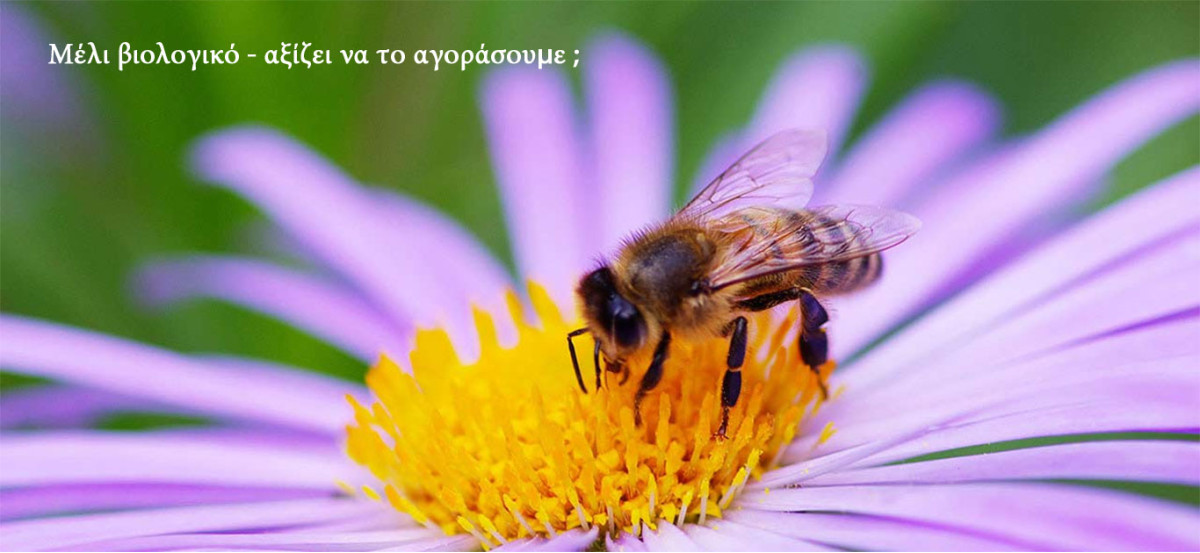
Organic or conventional honey? What's the difference
Beekeeping is an important activity that helps protect the environment and supports farming and forestry through the pollination carried out by bees.
In this article we look at the main differences between organic and conventional honey.
Generally speaking, the biggest problem with honey is adulteration. It is easy to fall victim to fraud, as the authenticity of honey can only be confirmed by laboratory testing.
Crystallisation, sometimes mentioned as a sign of authenticity, is unfortunately not 100% proof that honey is genuine.
We would advise you to choose organic honey: we believe it is the healthier choice, and the chances of adulteration are much lower.
So let's look at what makes organic honey different.

Where organic hives are kept
In organic beekeeping, hives must be located in an area where, within a 3 km radius, there are organic crops and/or wild vegetation.
They must be kept at a sufficient distance from any non-agricultural sources of pollution, such as towns and cities, motorways, industrial areas, landfill sites, waste incinerators and so on. The authorities or inspection bodies set measures to ensure this requirement is met.
Feeding the bees
At the end of the production season, plenty of honey and pollen must be left in the hives to cover the bees' needs over the winter.
While in conventional beekeeping bees are often fed glucose, partly to boost production, this is strictly forbidden in organic beekeeping.
Artificial feeding in organic production is only allowed when the colony's survival is threatened by extreme weather. It must be done only with organic honey, preferably from the same organic unit!
In freezing conditions, organic sugar syrup or organic sugar molasses may be allowed instead of organic honey, when the weather causes the honey to crystallise.
Artificial feeding is only allowed between the last honey harvest and 15 days before the start of the next nectar or honeydew flow.

Disease prevention and veterinary treatment
In organic beekeeping, the use of antibiotics and other medicines for bee diseases is prohibited, whether for prevention or treatment.
This is perhaps the most important difference between organic and conventional honey: where antibiotics or other medicines have been given to a colony, residues can pass into the honey it produces.
Disease prevention in organic beekeeping is based on the following principles:
- Choosing suitable, hardy bee breeds.
- Practices that strengthen resistance to disease and prevent infection, such as:
- regular renewal of queens
- systematic hive inspections to spot any health problems
- controlling drones in the hives
- regular disinfection of materials and equipment
- destroying contaminated material or sources of contamination
- regular renewal of beeswax
- sufficient pollen reserves in the hives
If, despite all these preventive measures, the colonies become sick or infected, they must be treated immediately where necessary. In this case, the colonies may be moved to isolated apiaries and the following practices apply:
- Herbal and homeopathic products are preferred over synthetic chemical medicines, as long as they are effective for the disease in question.
- If these products prove, or seem likely to prove, ineffective at eliminating a disease or infestation that threatens to wipe out the colonies, chemical medicines may be used under a vet's responsibility.
In this last resort, the colonies are isolated during the treatment and all the wax must be replaced with wax that meets the requirements of the EU organic beekeeping regulation.
These colonies must then go through a one-year conversion period before they can be considered organic again!
Good husbandry practices
- In organic beekeeping, killing bees in the combs as a way of harvesting hive products is prohibited.
- Mutilation, such as clipping the queen's wings, is prohibited.
- Destroying male brood is prohibited. It may only be allowed to control the varroa mite (Varroa jacobsoni).
- Synthetic chemical repellents may not be used during honey harvesting.
- Hives must be made mainly of natural materials that pose no risk of contaminating the environment or the hive products.
- Only products such as propolis, beeswax and plant oils may be used inside the hives.
- Wax for new combs must come from organic production units.
- Physical treatments, such as steam or a naked flame, are allowed.
I have often heard people claim that there is no difference between organic and conventional honey. From all of the above, we can see that this is not quite the case. Of course, there are plenty of good-quality conventional honeys, but let's remember the key differences:
In organic beekeeping, antibiotics are prohibited, whether for treatment or prevention. Artificial feeding is prohibited; it may only be allowed in exceptional circumstances, and only with organic honey, preferably from the same hive…
For all these reasons, and more, let's make the honey we buy organic. It's worth it!
Article source: organiclife.gr (in Greek)