Red Rooibos Tea: 7 Amazing Benefits
Red rooibos tea: 7 amazing benefits
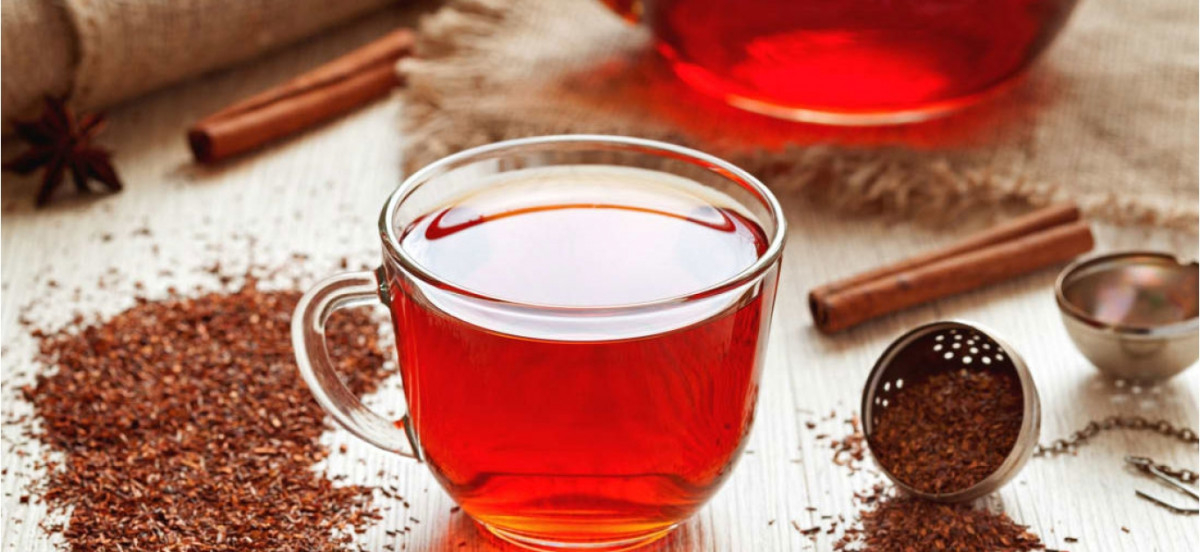
Rooibos tea is a red herbal drink made from the leaves of the Aspalathus linearis shrub, a plant native to South Africa. Many people enjoy it as an alternative to green or black tea. It is available both oxidised and unoxidised. Rooibos tea has a rich, naturally sweet taste and contains a number of antioxidants, which explain much of its appeal for wellbeing.
7 great reasons to enjoy rooibos tea
1. Caffeine-free
Rooibos tea contains no caffeine, so it is a great choice for children, pregnant women and anyone sensitive to caffeine. Although caffeine has some benefits, not everyone can take it safely. It can disturb sleep, worsen anxiety and cause physical symptoms such as palpitations and shakiness.
2. Low in tannins
Red rooibos tea is very low in tannins. Tannins are found in many plants, such as black and green tea, as well as in red wine, and they affect the absorption of iron, especially non-haem iron from plant foods. According to a 2013 study, drinking six cups of rooibos tea a day for 6 weeks did not negatively affect participants' iron status.
3. Rich in antioxidants
Rooibos tea contains a range of antioxidants, with the unoxidised (green) version containing more than the red, oxidised one. Some of the best known are quercetin and aspalathin. Antioxidants matter because they are studied for their role against free radicals, which can damage our cells. An animal study found that rooibos tea may improve the antioxidant status of the liver.
4. Heart health
Rooibos tea is naturally rich in antioxidants and is appreciated in heart-friendly routines, including those focused on healthy cholesterol levels. In a 2011 study, 40 people at risk of heart disease drank six cups of rooibos tea a day for 6 weeks. At the end of the study, they had significantly lower "bad" (LDL) cholesterol and significantly higher "good" (HDL) cholesterol.
5. Blood sugar
Rooibos tea is studied in relation to blood sugar levels. Research has found that aspalathin, an antioxidant found in rooibos, has been studied for its potential role in blood sugar balance, as well as in relation to blood vessel inflammation and atherosclerosis.
6. Weight management
Rooibos tea has virtually no calories, so it is an excellent choice if you are trying to lose weight or maintain a healthy weight. According to a 2014 study, rooibos tea has been studied in relation to leptin, a hormone that regulates food intake and signals fullness.
7. Fewer wrinkles
According to some research, applying rooibos tea to the skin may improve its appearance by reducing wrinkles. For example, a 2010 study compared cosmetic gels made with herbal extracts: ginkgo, soya and a blend of tea and rooibos. The researchers found that the tea and rooibos blend was the most effective at reducing wrinkles, while ginkgo was the best moisturiser.
We read about it on enallaktikidrasi.com (in Greek)
- https://www.ncbi.nlm.nih.gov/pubmed/25212140
- https://www.ncbi.nlm.nih.gov/pmc/articles/PMC3967803/
- https://www.ncbi.nlm.nih.gov/pubmed/20412217
- https://www.ncbi.nlm.nih.gov/pubmed/29388183
- https://www.ncbi.nlm.nih.gov/pubmed/20833235
- https://www.sciencedirect.com/science/article/pii/S0308814610005923