The Traditional Medicinal Uses of Walnuts
The traditional medicinal uses of walnuts
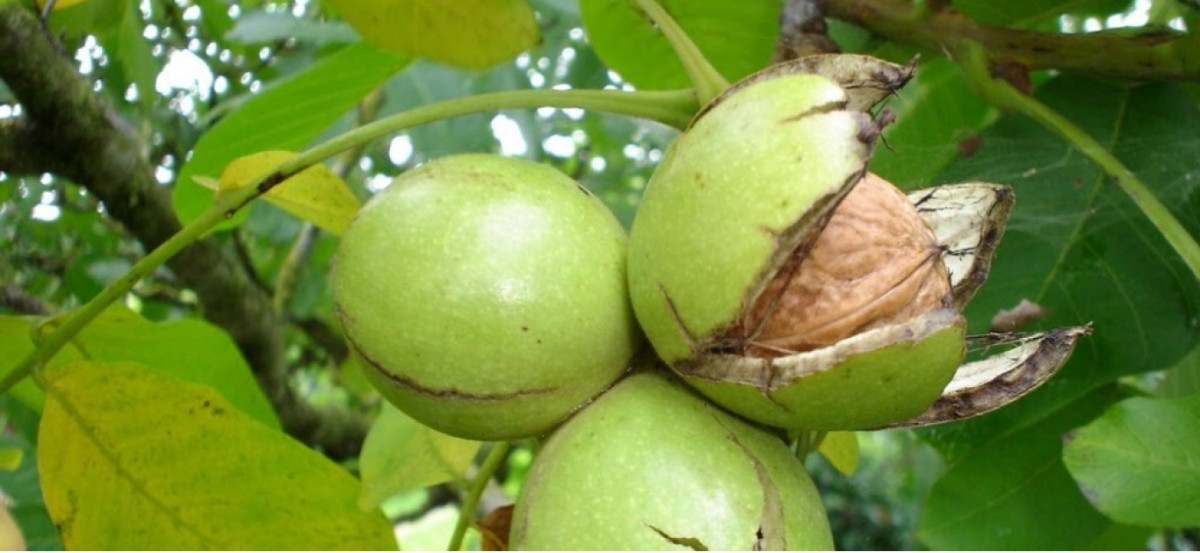
The walnut is one of the most blessed trees in Greece. It has many traditional uses, not only for people but for animals too. Animals with mites or tapeworm will often eat unripe walnuts, which are traditionally valued for their anthelmintic (anti-worm) properties.
Every part of the walnut tree is useful: the leaves, the green husk of the fruit, the bark of the branches and roots, the skin of the kernel, the nuts, the flowers and even the wood.
Walnut leaves and husks are traditionally valued as soothing, astringent, restorative and tonic. They have traditionally been used for lymphatic and glandular complaints and for skin conditions such as lichen, eczema, cold sores and slow-to-mend sores, as well as for the liver and pancreas and for blood sugar. The leaves and unripe nuts are traditionally used against tapeworm and intestinal parasites, and the leaves have been used for joint pain, rheumatism, anaemia, weakness, chest complaints and bone problems.
Walnuts are the edible kernels of the fruit of a tree in the Juglandaceae family, genus Juglans. These nuts have always been a symbol of the intellect, as their shape resembles the human brain: a left and a right hemisphere, an upper and lower brain and a cerebellum. Even the folds of the walnut look just like the cortex of our brain. Today we know that walnuts are valued for brain development and function.
Unripe walnuts are one of the richest sources of ascorbic acid (vitamin C), and they are easier to digest unripe, because once overripe they turn yellow, go rancid and irritate the throat.
Walnuts have been known for their medicinal properties since ancient times, thanks to the countless powerful plant compounds they contain. Some of the compounds that have been studied for their properties are alpha-linolenic and linoleic acid, palmitic, stearic and oleic acid, cobalt, manganese, naphthoquinones, acids, flavonoids, terpenoids, carotenoids, volatile oils, hydrocarbons, tannins, aldehydes, alkaloids, phosphoglycerides and amines.
According to Hartwell (1967–1971), walnuts have also been used in folk medicine for poisoning, asthma, back pain, colic, conjunctivitis, coughs, heartburn, premature ejaculation, impotence and rheumatism.
Walnuts are rich in polyunsaturated fatty acids (around 72%) and are one of the best plant sources of omega-3 fatty acids (alpha-linolenic acid, ALA); they also contain omega-6 (linoleic acid) and monounsaturated fats such as oleic acid. ALA contributes to the maintenance of normal blood cholesterol levels (the beneficial effect is obtained with a daily intake of 2 g of ALA), and walnuts contribute to the improvement of the elasticity of blood vessels (the beneficial effect is obtained with a daily intake of 30 g of walnuts).
Just 25 grams of walnuts a day provides about 90% of the recommended daily intake of omega-3 fatty acids. Omega-3 fatty acids are studied for their anti-inflammatory potential and in relation to blood pressure and heart and brain health.
Walnuts are a rich source of plant compounds with strong antioxidant activity, such as melatonin, ellagic acid, vitamin E, carotenoids and polyphenols. These compounds are studied in relation to ageing, inflammation and brain health.
Scientists at the University of Scranton in Pennsylvania found that walnuts have the highest levels of antioxidant polyphenols of any nut. Just 6–7 walnuts a day make a meaningful contribution to your antioxidant intake.
Walnuts are also an excellent source of vitamin E, especially gamma-tocopherol (around 21 mg per 100 g). Vitamin E is a powerful fat-soluble antioxidant that contributes to the protection of cells from oxidative stress, helping to protect cell membranes in the mucous membranes and the skin. Walnuts also provide B vitamins such as riboflavin, niacin, thiamin, pantothenic acid, vitamin B6 and folate.
Walnuts are also a very rich source of minerals such as manganese, copper, potassium, calcium, iron, magnesium, zinc and selenium. Copper is a co-factor for many vital enzymes. Zinc is involved in enzymes that regulate growth and development, sperm production, digestion and the synthesis of nucleic acids. Selenium is a co-factor for antioxidant enzymes such as glutathione peroxidase. Walnut oil has also been valued since ancient times for its anthelmintic properties.

What research says about walnuts
1. Walnuts and longevity
The PREDIMED study, which assessed the Mediterranean diet, found that eating walnuts was linked to lower mortality. And a study of 118,000 people from the Harvard School of Public Health found that people who ate a handful of walnuts every day were 20% less likely to die from any cause over a 30-year period.
2. Heart
In a University of Wisconsin study, 36 people ate 30 grams of English walnuts a day for 30 days. Their blood lipid profile and endothelial function improved, and they did not gain weight. Walnuts have been studied in relation to total and LDL cholesterol. In an Iranian study, 52 volunteers were split into two groups: one ate 20 grams of walnuts a day and the other ate none. After eight weeks, the walnut group lowered their triglycerides by 17.1% and raised their HDL ("good") cholesterol by 9%.
3. Walnuts, thinking and memory
In a crossover study, researchers had 64 students eat 7 walnuts a day and gave another 64 a placebo. After eight weeks, the walnut group improved their verbal reasoning by 11.2%. Other studies suggest that a higher intake of the antioxidants found in walnuts may support mental and motor function as we age, and they are being studied in relation to Alzheimer's disease.
4. Walnuts are number one for antioxidants
Walnuts contain almost twice as many antioxidants as any other nut, and of the highest quality. One study found that the antioxidants in walnuts were 2 to 15 times more potent than those in other nuts, and than vitamin E.
5. Walnuts and bones
Greek researchers found that walnut extract had notable bone-building activity at a cellular level. Ellagic acid, one of the most important polyphenols in walnuts, was responsible for this effect.
6. Walnuts and stress
According to researchers at Penn State University, a diet rich in walnuts may help the body cope much better with stress. In one study, 22 healthy adults with raised LDL cholesterol put one foot in cold water while answering questions. Those whose diet included walnuts and walnut oil had lower blood pressure and were much less stressed in their answers.
7. Walnuts and blood sugar
Australian researchers studied 50 overweight adults with diabetes over a one-year programme: half followed a low-fat diet without walnuts and the other half ate 30 grams of walnuts a day. In the first three months, the walnut group significantly lowered their blood sugar and improved their insulin resistance.
8. Walnuts and male fertility
UCLA researchers studied 117 young men eating a typical Western diet. They gave 59 of them 75 grams of walnuts a day, while the rest avoided nuts altogether. After 12 weeks, those who ate walnuts significantly improved the vitality, motility and quality of their sperm, by 27%.
Sadly, the modern Greek diet does not include nuts every day, even though walnuts are the best-known and healthiest Greek nut. Just a quarter of a cup of walnuts provides over 100% of the recommended daily intake of omega-3 fats, along with plenty of copper, manganese, molybdenum, biotin and many other important nutrients. So why not make walnuts part of your daily diet?
Written by Ioannis Kargas (Facebook group, in Greek: Alternative and Complementary Therapies)
Medical references
- [ii] Peter J Fitschen, Kristofer R Rolfhus, Michael R Winfrey, Brian K Allen, Michelle Manzy, Margaret A Maher. Cardiovascular effects of consumption of black versus English walnuts. J Med Food. 2011 Sep;14(9):890–8. Epub 2011 Apr 13. PMID: 21488754
- [iii] Walnut consumption in hyperlipidemic patients. Angiology. 2005 Sep–Oct;56(5):581–3. PMID: 16193197
- [iv] Differential effects of walnuts vs almonds on improving metabolic and endocrine parameters in PCOS. Eur J Clin Nutr. 2011 Mar;65(3):386–93. Epub 2010 Dec 15. PMID: 21157477
- [v] Long-term effects of increased dietary polyunsaturated fat from walnuts on metabolic parameters in type II diabetes. Eur J Clin Nutr. 2009 Aug;63(8):1008–15. Epub 2009 Apr 8. PMID: 19352378
- [vi] Walnuts Improve Semen Quality in Men Consuming a Western-Style Diet: Randomized Control Dietary Intervention Trial. Biol Reprod. 2012 Aug 15. PMID: 22895856
- [vii] Effects of walnut consumption on cognitive performance in young adults. Br J Nutr. 2011 Sep 19:1–9. PMID: 21923981
- [viii] Grape juice, berries, and walnuts affect brain aging and behavior. J Ethnopharmacol. 2008 Aug 13;118(3):396–404. PMID: 19640963