White Mulberries: Try This New Superfood
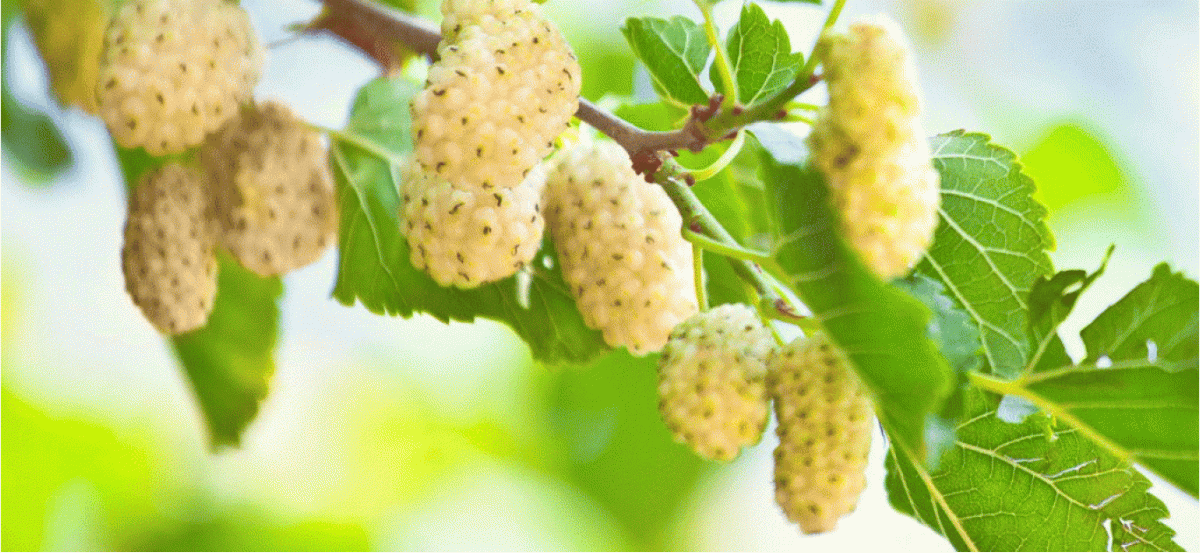
White mulberries: try this new superfood
White mulberries are often used in herbal traditions. Naturally rich in antioxidant anthocyanins and resveratrol, they are studied for their role against free radicals and are appreciated in heart-friendly routines, including those focused on healthy cholesterol levels. Extracts of the fruit, as well as the leaves and bark of the white mulberry tree, are traditionally used for healthy blood sugar levels.
The white mulberry (Morus alba) is a tree smaller than its red cousin and can reach 10–20 metres in height. It originates from northern China but is now grown almost all over the world.
Its fruit is very sweet, but lacks the intense flavour of red or black mulberries. It is widely cultivated because its leaves feed the silkworms that produce precious silk. It is also popular as an ornamental tree, providing shade in parks and gardens.
The ancient Chinese considered white mulberries an integral part of their medicine and used not only the fruit, but also the leaves and bark of the tree.
White mulberries are a rich source of nutrients such as vitamins C and K, iron, riboflavin, potassium, calcium and phosphorus. They also contain a good amount of fibre and a wide range of plant compounds, such as zeaxanthin, resveratrol, anthocyanins, lutein and many other polyphenols.
Various studies, mainly in mice, suggest that white mulberry may be a powerful ally for wellbeing. Several studies in diabetic mice found that the anthocyanins in white mulberries lowered the animals' blood sugar, and they have been studied in relation to heart health, platelet aggregation, nitric oxide and the hardening of the arteries.
Fibre is appreciated in heart-friendly routines focused on healthy cholesterol levels. Studies in mice found that white mulberry extract lowered cholesterol and blood pressure in animals fed a high-fat diet, while quercetin was studied in relation to atherosclerosis.
Oxidative stress damages cells and tissues. Animal studies suggest that the antioxidants in mulberry juice may help reduce oxidative stress, and they are also being studied in relation to brain health, including Alzheimer's and Parkinson's disease. White mulberry leaves have traditionally been used for inflammation linked to long-term conditions.
Resveratrol, the active plant compound found in white mulberries (and red wine), has been studied in relation to fat storage in the liver. White mulberries contain vitamin C, which contributes to the normal function of the immune system, and their fibre supports digestive health, including bloating, cramps and regularity. They also contain vitamins A and E; vitamin E contributes to the protection of cells from oxidative stress, and vitamin A contributes to the maintenance of normal skin. Another compound, zeaxanthin, is studied in relation to the cells of the retina and healthy vision. Finally, they contain calcium, vitamin K and phosphorus, which contribute to the maintenance of normal bones.
Source: itrofi.gr (in Greek)