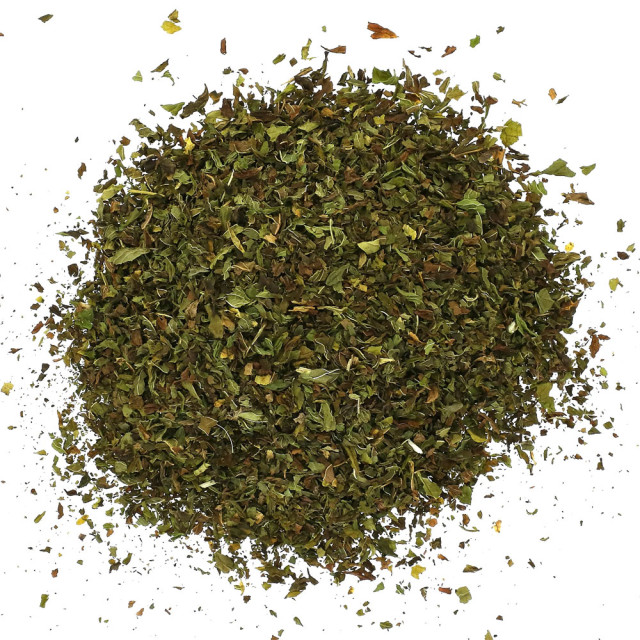
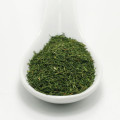
Culinary use
Use freely as a culinary herb and add near the end of cooking. As a guide, 1–2 teaspoons of dried dill weed replace about 2–3 tablespoons of fresh dill.

 Zoom
Medicinal & Therapeutic Herbs
Anethum graveolens L.
Also known as: Garden Dill, Dill Herb.
Dill is an annual aromatic plant of the carrot family, native to Asia and the Mediterranean. Its dried leaves are an aromatic Greek and Mediterranean culinary herb, traditionally used for digestion, bloating and appetite.
Send us a message and we reply within one working day. Or call us on (+30) 2610 221354 during shop hours.
Send a message(+30) 2610 221354Dill is an annual aromatic plant of the carrot family, native to Asia and the Mediterranean. Its dried leaves are an aromatic Greek and Mediterranean culinary herb, traditionally used for digestion, bloating and appetite.
The leaves are naturally rich in essential oil (mainly carvone, α-phellandrene, limonene), flavonoids and vitamin C. The essential oil has mild antispasmodic action on digestion.
In traditional Mediterranean phytotherapy, dill is recorded for:
and as a galactagogue for breastfeeding women.
Stronger digestive, antispasmodic and galactagogue references mainly concern the seed rather than the dosage of dried leaves.
In cooking it flavours fish, courgettes, beetroot, carrots, cucumbers, salads, yoghurt, bread, tsoureki, pickles, soups, minced meat, white cheeses, eggs and fish marinades, as well as traditional Greek and Scandinavian dishes. The main producing countries include India, followed by China, Mexico and Spain.
Use freely as a culinary herb and add near the end of cooking. As a guide, 1–2 teaspoons of dried dill weed replace about 2–3 tablespoons of fresh dill.
Use 1–2 g per cup of boiling water, cover for 10 minutes and drink after food up to 1–2 times daily for a short period.
Infants: Historical “dill water” mainly concerns fruit preparations and is not converted into a numerical household dose for an infant. Any use in an infant is a paediatric decision.
The quantities are indicative and are based on traditional use and published phytotherapy literature. For prolonged use or when taking medication, consult a qualified healthcare professional.
In cooking: with parsley, mint, fennel, garlic, lemon. As digestive infusion: with anise, cumin, lemon balm.
Fish, vegetables, soups, eggs, white cheese, yoghurt and marinades.
Yes, occasionally: 1–2 g per cup, up to 1–2 times daily for a short period.
No household numerical dose is supplied. Any use in an infant is exclusively a paediatric decision.
Have you tried Dried Dill weed? Tell us what you think.
0.70€50 g · 3 weights
1.20€50 g · 3 weights
1.68€50 g · 3 weights
2.99€100 g · 2 weights