Infusion
Crush 1–2 g of juniper berries (about 1 teaspoon) and place in a cup of hot water. Cover and steep 10 minutes. Drink 2–3 times daily, before meals.

 Bestseller Zoom
Medicinal & Therapeutic Herbs
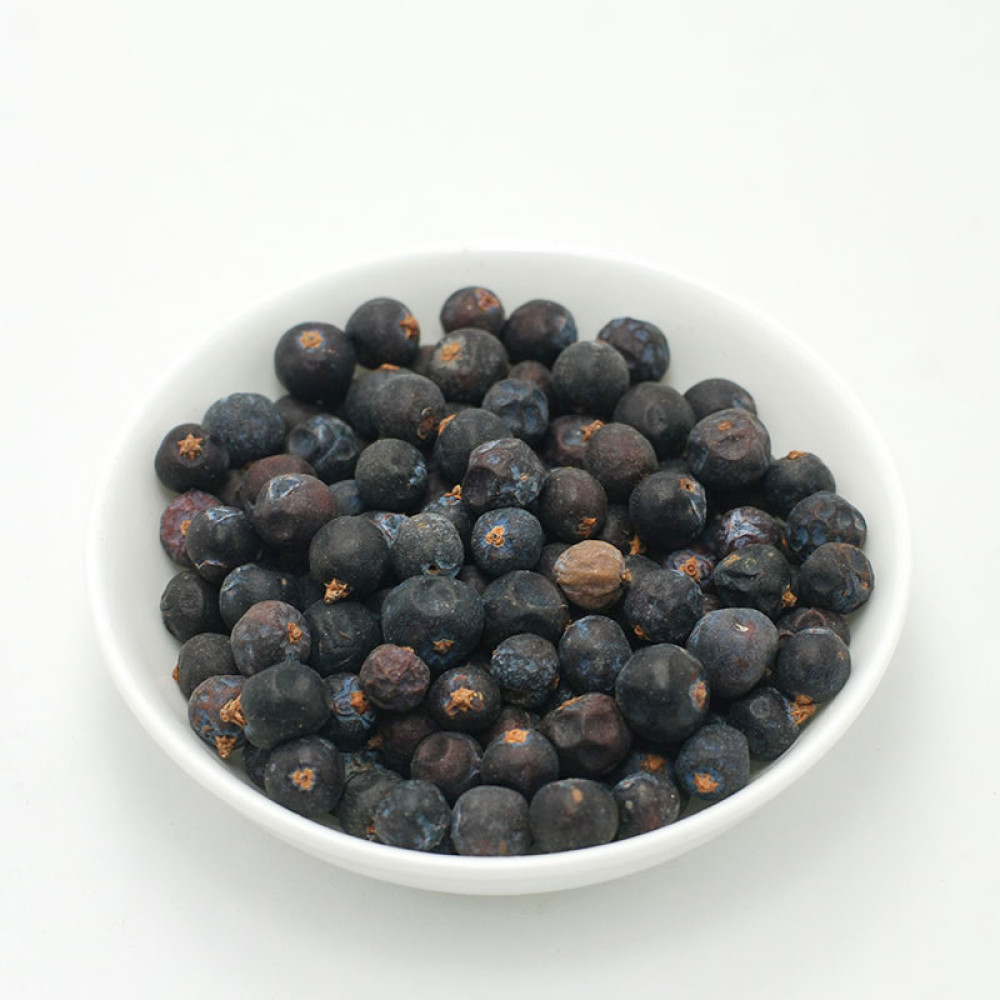
Juniperus communis L.
Also known as: Common Juniper, Juniper berries.
Juniper is an evergreen shrub or small tree of the cypress family, native throughout Northern Europe, the Balkans and the Greek mountains. Its berries have been used for millennia for urinary complaints, rheumatic conditions and as a digestive spice. It is the characteristic aromatic that gives gin its identity.
Send us a message and we reply within one working day. Or call us on (+30) 2610 221354 during shop hours.
Send a message(+30) 2610 221354Juniper is an evergreen shrub or small tree of the cypress family, native throughout Northern Europe, the Balkans and the Greek mountains. Its berries have been used for millennia for urinary complaints, rheumatic conditions and as a digestive spice. It is the characteristic aromatic that gives gin its identity.
The berries are naturally rich in essential oil (α-pinene, myrcene, sabinene), flavonoids, tannins and bitter compounds. The essential oil is documented in current European herbal literature for mild diuretic action and digestive support. The traditional berry profile includes tonic, diuretic, antiseptic and antirheumatic properties.
In traditional European phytotherapy, juniper has been documented for:
chronic arthritis, gout, rheumatic conditions, and dyspepsia, flatulence, intestinal colic and mild digestive issues.
Traditionally appreciated in wellness routines focused on natural diuresis, digestion of fatty meals and rheumatic comfort.
In cooking flavours game meats, cabbage rolls, marinades and gin.
Crush 1–2 g of juniper berries (about 1 teaspoon) and place in a cup of hot water. Cover and steep 10 minutes. Drink 2–3 times daily, before meals.
4–6 berries per kilo of meat in marinade, or in stews with game, venison, wild boar.
Abundant water intake recommended (2+ litres per day).
The quantities are indicative and are based on traditional use and published phytotherapy literature. For prolonged use or when taking medication, consult a qualified healthcare professional.
For urinary tract: with couch grass, parsley, Java tea, corn silk. For rheumatic: with devil's claw, willow bark, raspberry. For digestion: with gentian, angelica, fennel.
No. Juniper (Juniperus communis) gives the juniper berries. Cedar trees (Cedrus) of Greece give a different resin and are unrelated to juniper berries.
Traditionally 4–6 berries per kilo of meat, lightly crushed to release the aroma. Ideal for game, stews, cabbage rolls.
Juniper is the main aromatic in gin — the word "gin" itself comes from Dutch "jenever" and French "genièvre" meaning juniper. Gin by definition must have juniper berries as its main botanical.
Have you tried Juniper berries? Tell us what you think.
0.65€50 g · 3 weights
3.10€50 g · 3 weights
2.20€50 g · 3 weights