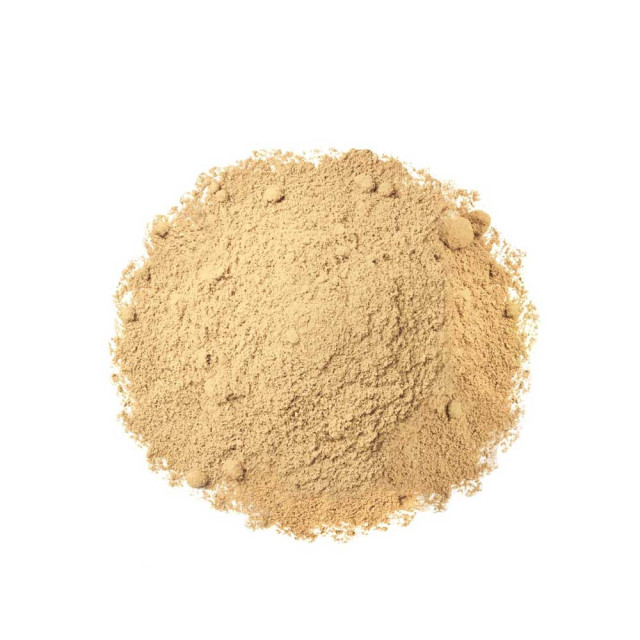
Maca powder
1 teaspoon of powder (about 3–5 g), once or twice a day, dissolved in a glass of smoothie or juice, or stirred into yoghurt. Daily total 3–10 g.

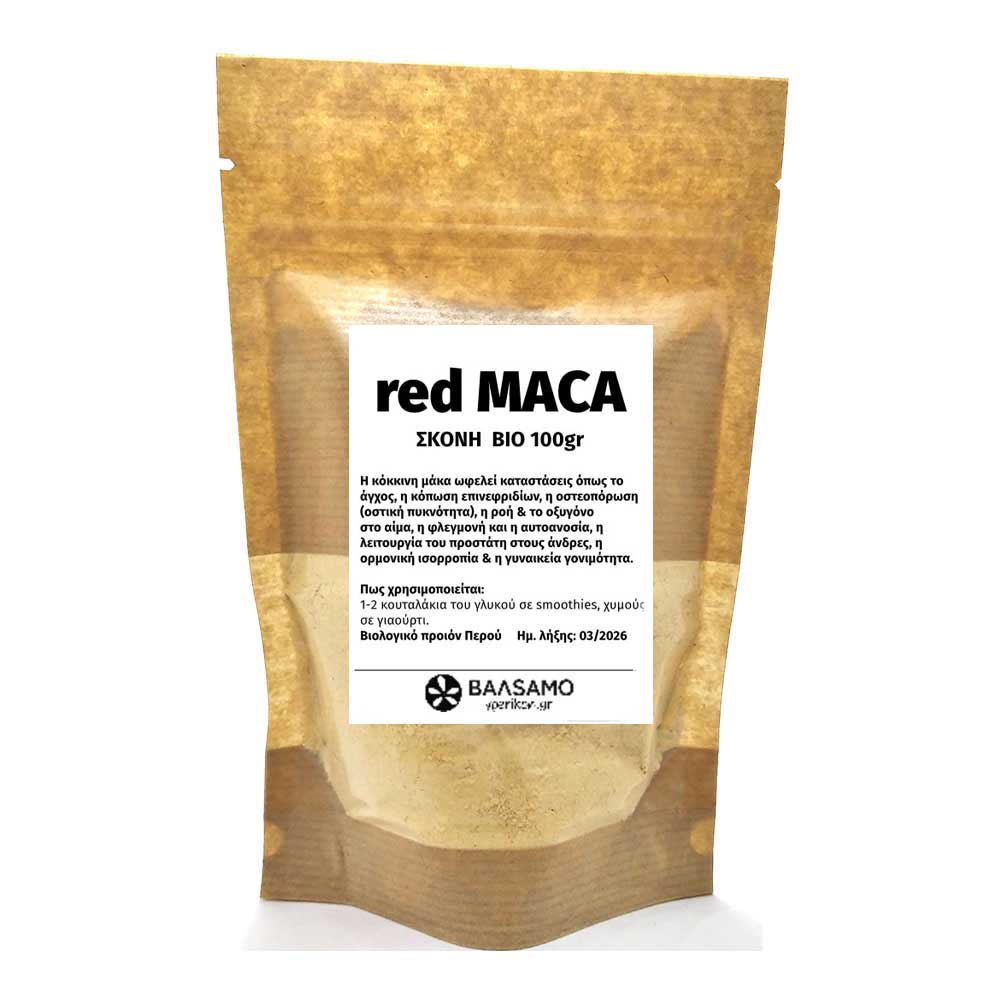 BIO Zoom
Medicinal & Therapeutic Herbs
Lepidium meyenii Walp. (syn. Lepidium peruvianum Chacón)
Also known as: red maca, maca roja, Peruvian maca, Lepidium meyenii, kokkini maka (transliteration).
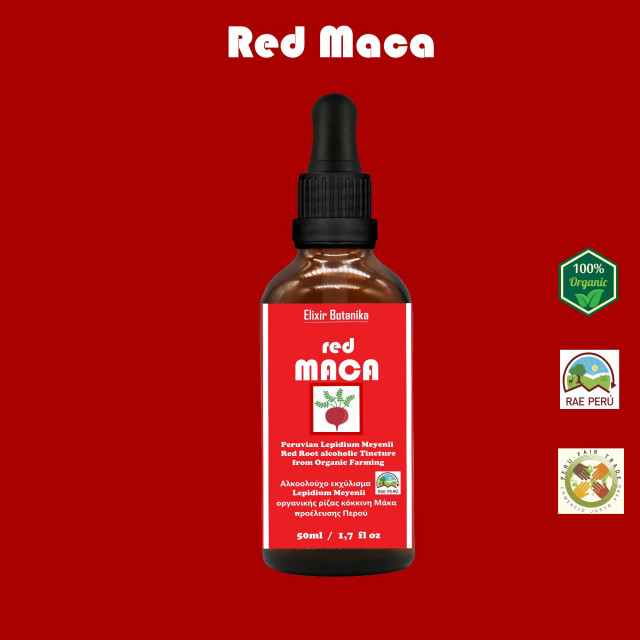
Red maca (Lepidium meyenii) is grown in the Peruvian Andes and is a natural superfood, historically known for its nutritional and medicinal properties.
Send us a message and we reply within one working day. Or call us on (+30) 2610 221354 during shop hours.
Send a message(+30) 2610 221354Red maca (Lepidium meyenii) is grown in the Peruvian Andes and is a natural superfood, historically known for its nutritional and medicinal properties. It is rarer than the yellow variety (20–25% of production) and in Andean tradition represents the inner, feminine energy — the kind that nourishes, stabilises and calms. Studies have shown it contains higher levels of bioactive compounds than yellow and black maca.
Adaptogen, nutritive, hormone-balancing, anti-inflammatory, calming tonic. Many of the amino acids and fatty acids in red maca act on the central nervous system, modulating neurotransmitter release — an explanation for its relationship with mood and libido. A balancing effect on the endocrine system through improved hormonal balance has been documented.
For anxiety, adrenal fatigue, osteoporosis and bone density, blood flow and oxygenation, inflammation and autoimmunity, prostate function in men, hormonal balance, female fertility, menopause symptoms and premenstrual syndrome. Suitable for both men and women.
Daily in a smoothie, juice or yoghurt. Red maca is preferred when the goal is nourishment, stability and balance — for a more outward drive toward energy, cognitive focus and male fertility, black maca is the choice.
Maca root contains 10.5% protein, 8.5% dietary fibre, 19 essential amino acids and vitamins A, B1, B2, B3, C and D. It is an excellent source of iron, magnesium, copper, zinc, sodium, potassium, calcium and free fatty acids. The proteins, vitamins and minerals provide energy and stamina, carrying nutrients and oxygen to various parts of the body and converting food into energy.
For energy and stamina, traditionally with cacao and guarana. As an adaptogen it combines with ashwagandha and rhodiola. For hormonal balance in menopause with black cohosh and lady's mantle. For cognitive focus with ginkgo biloba.
1 teaspoon of powder (about 3–5 g), once or twice a day, dissolved in a glass of smoothie or juice, or stirred into yoghurt. Daily total 3–10 g.
Ideally in the morning or early in the day, given its tonic character. The flavour is slightly caramel-like and pairs well with cacao, banana and oats.
Maca is usually taken in cycles of 8–12 weeks, with a 1–2 week break. Adaptogenic profiles are assessed after at least 4–6 weeks of regular use.
The amounts given are indicative, based on traditional use and published phytotherapy literature. For prolonged use or if you are on medication, consult a qualified health professional.
Maca is generally considered safe for most people and is unlikely to cause side effects at moderate doses. However, because of its effect on hormones, it is avoided alongside hormonal therapies without professional supervision — thyroid medication, hormone-dependent conditions, hormone-dependent cancers, endometriosis, fibroids. As a Brassicaceae plant, maca contains glucosinolates: in hypothyroidism or iodine deficiency, a cooked or gelatinised form is preferred, along with a discussion with your doctor. It is not recommended in pregnancy and breastfeeding due to insufficient data. Given its tonic character, evening use may affect sleep in sensitive individuals. Monitoring is required with raised blood pressure or antihypertensive therapy. Not given to children without medical direction.
Anyone looking for nourishment, stability and hormonal balance: anxiety, adrenal fatigue, bone density, menopause, female fertility and prostate function. It is suitable for both women and men.
10.5% protein, 8.5% dietary fibre, 19 essential amino acids and vitamins A, B1, B2, B3, C and D. It is also a good source of iron, magnesium, copper, zinc, potassium and calcium.
Maca does not act immediately. As an adaptogen, its profile is assessed after 4–6 weeks of regular daily use. Common practice is cycles of 8–12 weeks with a 1–2 week break.
Have you tried Red maca root powder? Tell us what you think.