Root decoction
Gently simmer 2 g of cut root in 200 ml water for 10–15 minutes and strain. Take up to 3 times daily for a short period, giving 6 g/day — the lower end of the traditional daily range.

 Zoom
Medicinal & Therapeutic Herbs
Dioscorea villosa L.
Also known as: wild yam, colic root, Dioscorea. In Greek: άγριο γιαμ ρίζα.
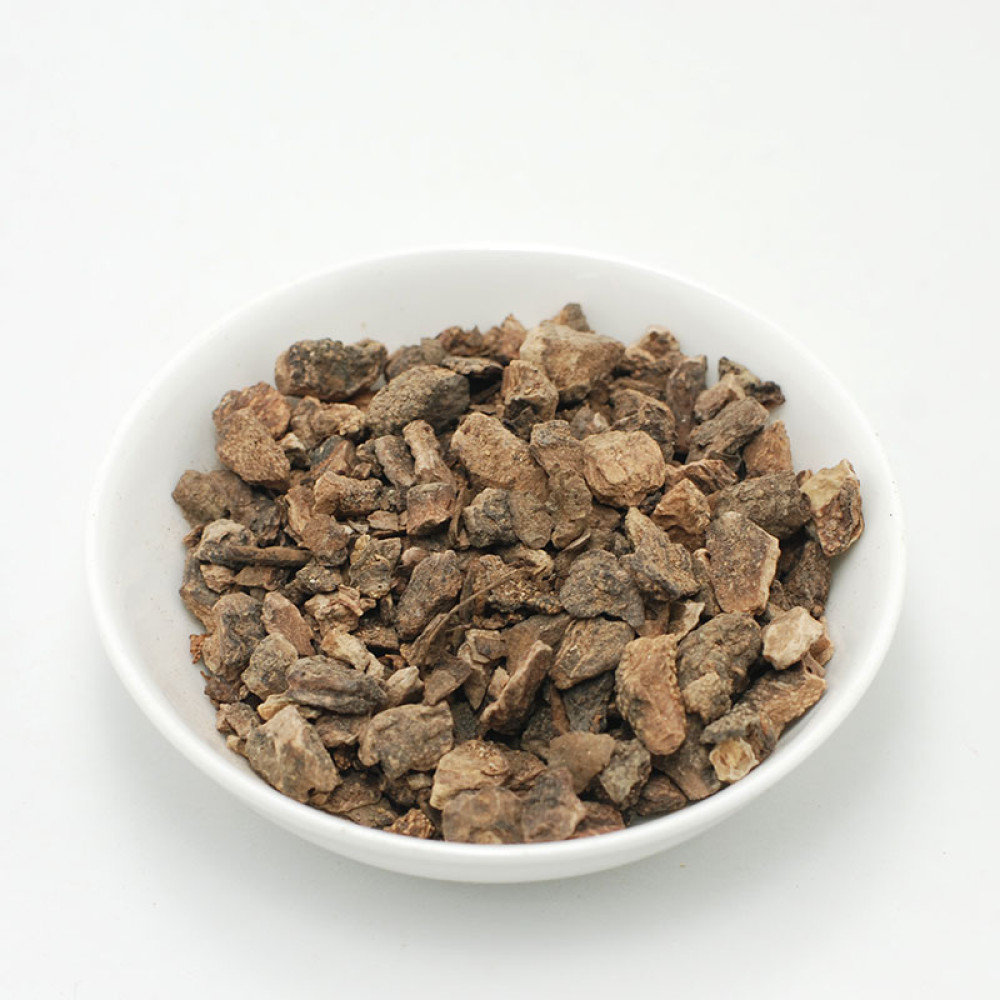
Wild yam is a root from North American herbal tradition, also known as colic root. It is mainly chosen in traditional practice for cramping and menstrual, abdominal or digestive discomfort.
Send us a message and we reply within one working day. Or call us on (+30) 2610 221354 during shop hours.
Send a message(+30) 2610 221354Wild yam is a root from North American herbal tradition, also known as colic root. It is mainly chosen in traditional practice for cramping and menstrual, abdominal or digestive discomfort.
It contains diosgenin, an industrial starting material for manufacturing steroid hormones. The human body does not convert it into progesterone, and a decoction is not hormone therapy or contraception. Traditional literature describes it as antispasmodic, smooth-muscle relaxing, anti-inflammatory and analgesic. Cell and animal studies have explored glucose response, body fat, sperm motility and hormone-dependent cancer models, but those findings cannot be transferred directly to the tea.
Recorded uses of the herb include:
Older texts also mention urinary infection, interstitial cystitis and labour pain, all of which require professional care.
A small amount is used traditionally for cramping discomfort. The terms progesterone, contraceptive and fertility are often associated with wild yam, but a clear distinction is needed between the herb, laboratory diosgenin and prescribed hormonal medicines.
Gently simmer 2 g of cut root in 200 ml water for 10–15 minutes and strain. Take up to 3 times daily for a short period, giving 6 g/day — the lower end of the traditional daily range.
The quantities are indicative and are based on traditional use and published phytotherapy literature. For prolonged use or when taking medication, consult a qualified healthcare professional.
For menstrual cramps it is traditionally paired with chamomile or lemon balm. Fennel may complement it for digestive colic once biliary or other underlying causes have been excluded.
No. The root contains diosgenin, but the human body does not convert it into progesterone.
Simmer 2 g in 200 ml water for 10–15 minutes, up to three times daily for a short period.
No. It is contraindicated during pregnancy and breastfeeding and must not be used to induce labour.
Have you tried Wild yam root? Tell us what you think.
2.51€50 g · 3 weights
2.82€50 g · 3 weights
5.90€50 g · 3 weights
1.05€50 g · 3 weights