Essiac Tea: The Legendary Herbal Formula of 1922
Essiac: the legendary herbal formula of 1922
Few herbal blends have a story as captivating as Essiac's. A Canadian nurse, an old recipe from the Ojibwa people, crowds of visitors at the door of a small clinic, and a name with a secret: "Essiac" is its creator's surname, Caisse, spelled backwards. Almost a century later, Essiac remains one of the best-known herbal formulas in the world.
The story, as it has been told
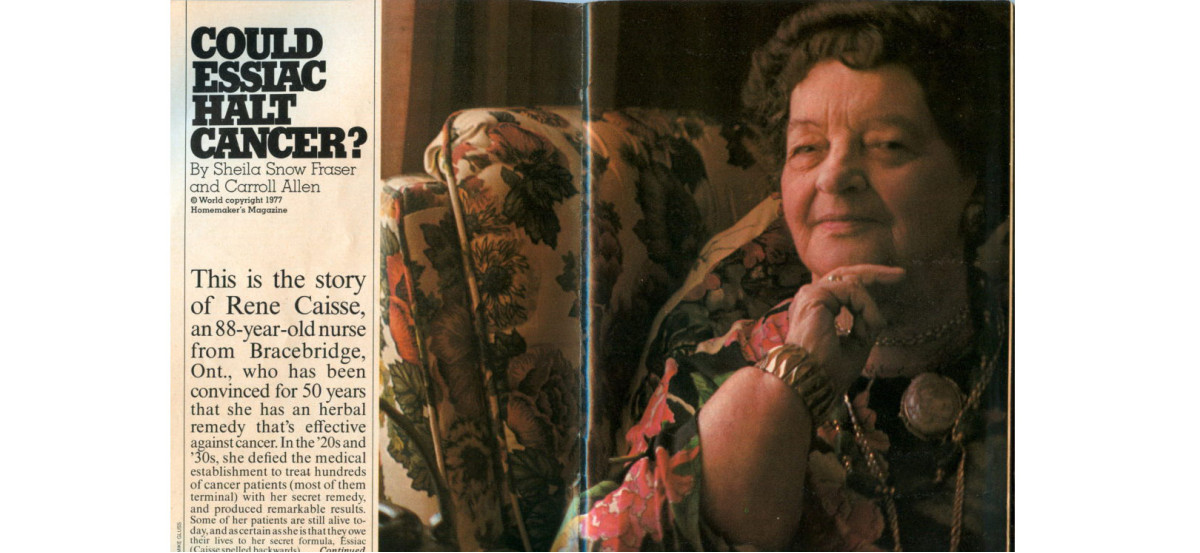
In 1922, Rene Caisse, a nurse from Ontario, Canada, noticed scar tissue on the breast of an elderly English patient. The woman told her that, years earlier, she had been diagnosed with breast cancer, but had not wanted to risk surgery and could not afford it. Instead, she had taken an old formula from an Ojibwa healer. Thirty years later she was still alive, and she passed the recipe on to Nurse Caisse.
Caisse began preparing the herbal blend for anyone who asked, and in 1934 she opened a clinic in Bracebridge, Ontario. According to accounts from the time, she never charged for her tea and turned down large sums of money to reveal the recipe. Her work drew strong opposition from the medical establishment, and she was accused of practising medicine without a licence.
But she also had passionate supporters. In 1938, 55,000 people signed a petition in her favour, and a bill that would have allowed her to continue her work in Ontario failed, so the story goes, by just three votes. Caisse kept preparing Essiac almost until the end of her life, and in 1977, a year before she died, she handed the formula to a company in Toronto.
This account is shared as history, not as a claim. Despite its long reputation, Essiac has not shown activity against cancer in controlled clinical studies, and it is not intended to diagnose, treat or prevent any disease. If you have a serious health condition, never stop your prescribed care, and discuss any herb with your doctor.

The four herbs of Essiac
What has kept Essiac alive to this day is its character as a cleansing blend for the liver and lymphatic system, made with four herbs that Western herbal tradition has used for centuries. You'll also find it as a ready-made blend in our online shop.
- Burdock root (Arctium lappa L.) – burdock: a classic "cleansing" herb in European tradition for the skin and liver.
- Slippery elm inner bark (Ulmus fulva Michx.) – slippery elm: rich in soothing mucilage, traditionally used to comfort the throat and digestive tract.
- Sheep sorrel – sorrel: the herb Caisse herself considered the "heart" of the formula.
- Indian rhubarb root (Rheum palmatum L.) – rhubarb root: known since ancient times for its gentle laxative action, and recognised by the European Medicines Agency for short-term use in occasional constipation.
The traditional recipe
Ingredients (for the dry blend):
- 680 g burdock root
- 450 g sheep sorrel powder
- 100 g slippery elm bark powder
- 30 g Indian rhubarb root powder
Method:
- Mix the herbs well and store them in a glass jar in a dark, dry cupboard.
- Allow 30 g of the blend for every 1 litre of water, and weigh out the amount you want to make.
- Bring the water to the boil, turn down the heat, add the herbs and simmer for 10 minutes. Turn off the heat, cover and leave overnight (about 12 hours).
- In the morning, warm it gently without boiling, let it settle for a few minutes, then strain it into a warm, sterilised glass bottle. Leave it to cool.
- Keep it in the fridge.
Traditional use: one wine glass of Essiac diluted in half a cup of hot water, once a day.
Advice and precautions
Essiac may have a laxative effect (because of the rhubarb root) and may make you urinate more often. If you notice any discomfort, such as diarrhoea, headaches or a skin rash, stop using it. Not to be used during pregnancy or breastfeeding, by children, or by people with kidney stones (sheep sorrel and rhubarb are high in oxalates). Slippery elm can slow the absorption of medicines, so drink Essiac at least two hours apart from other medication, and if you take any medicines, speak to your doctor first.
Please note: this product is not intended to diagnose, treat or prevent any disease. The information in this article is not a substitute for advice from your doctor or another health professional.