Traditional infusion
Pour 150 ml of boiling water over 1–2 g of dried herb, cover for 10–15 minutes and strain. Drink no more than 1–2 cups daily for a limited period.

 Zoom
Medicinal & Therapeutic Herbs
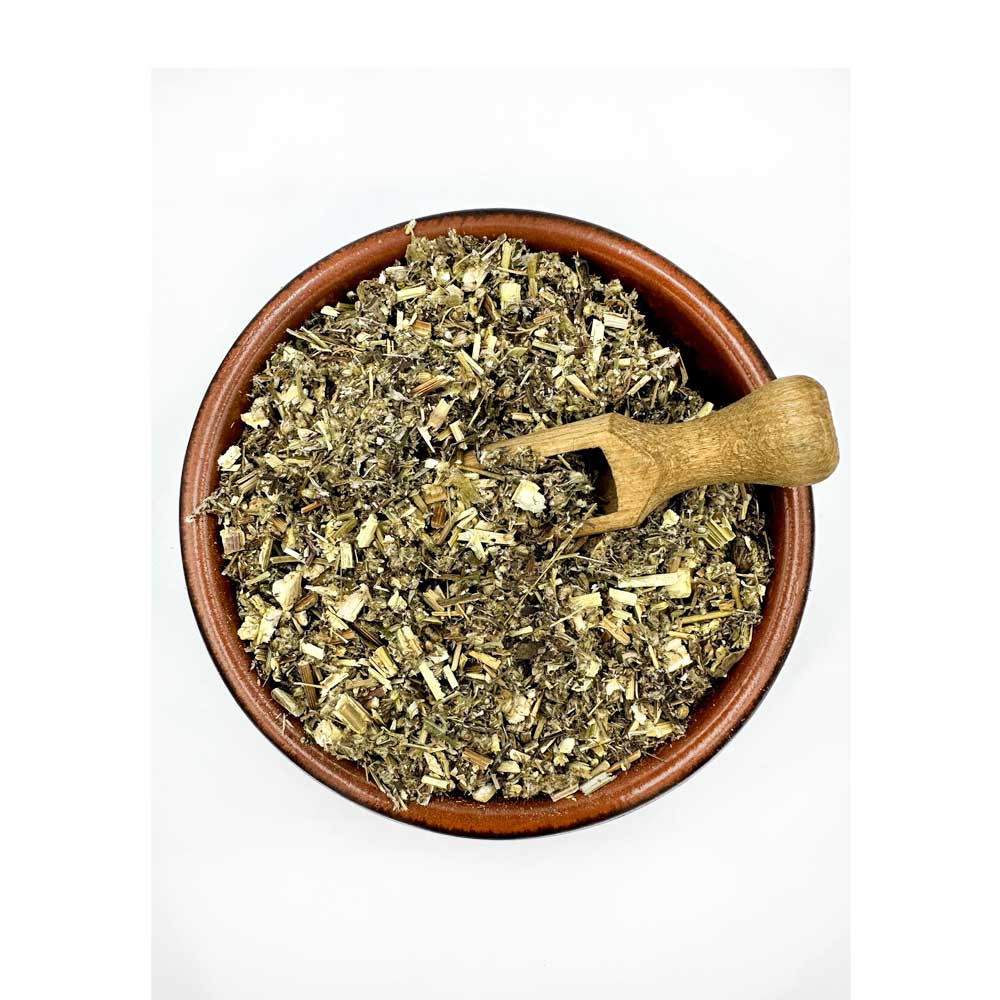
Scrophularia sp.
Also known as: Figwort. Greek names: Χοιράδιο, σκροφουλάρια.
A traditional aerial herb associated with skin and chronic irritation, lymphatic congestion, swollen lymph nodes and mild diuretic support.
Send us a message and we reply within one working day. Or call us on (+30) 2610 221354 during shop hours.
Send a message(+30) 2610 221354A traditional aerial herb associated with skin and chronic irritation, lymphatic congestion, swollen lymph nodes and mild diuretic support.
It contains iridoid glycosides, phenolic acids and flavonoids. Its traditional profile centres on lymphatic and skin-focused herbal use.
European folk practice links figwort with eczema, psoriasis and itching, oedema and swollen lymph nodes, and external applications for wounds, burns and skin ulcers. Traditional references also include poor circulation, mastitis and “blood cleansing/detoxification”, terms belonging to historical herbal practice.
Pour 150 ml of boiling water over 1–2 g of dried herb, cover for 10–15 minutes and strain. Drink no more than 1–2 cups daily for a limited period.
Once cooled, the same infusion is traditionally used as a wash or compress on small superficial areas of skin.
Amounts are indicative and based on traditional use and published herbal literature. For prolonged use or when taking medication, consult a qualified healthcare professional.
Traditionally combined with calendula or burdock in skin blends and with echinacea in lymphatic blends, only with guidance.
Excessive amounts may cause nausea, vomiting or severe diarrhoea. Traditional sources advise avoidance in tachycardia and heart disease. Anyone taking digoxin or other heart medication should not use figwort internally without medical advice. Avoid internal use during pregnancy, breastfeeding and in children. Do not apply to infected or deep wounds.
Figwort is chiefly selected for herbal blends focused on skin, lymphatic congestion and swollen lymph nodes.
Traditionally in washes and compresses for persistent skin irritation, wounds and minor burns.
Calendula or burdock in skin blends, and echinacea in traditional lymphatic blends.
Have you tried Figwort herb? Tell us what you think.