 Bestseller Zoom
Medicinal & Therapeutic Herbs
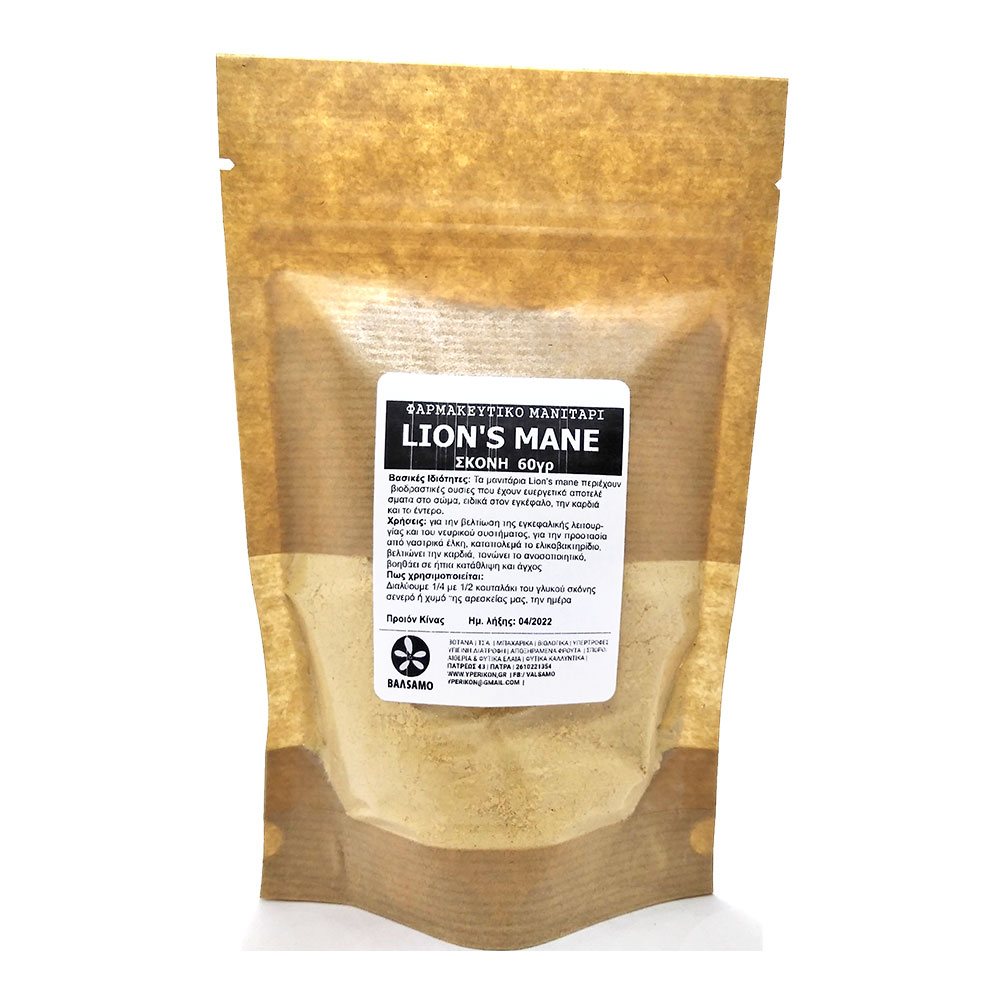
Lion’s Mane mushroom powder 50 g
Also known as: Lion’s Mane mushroom, monkey head mushroom, Hericium, hou tou gu, yamabushitake, chaíti tou liontarioú.
Lion’s Mane is an edible medicinal mushroom particularly associated with the brain, nervous system, stomach and immune function. It is large, white and shaggy, resembling a lion’s mane.
Shipping options
- EU countries: DHL from €18 · free over €200 (first 2 kg, by volumetric weight)
- Cyprus: ACS, BOX NOW or DHL · free with ACS or BOX NOW over €99
- Greece: ACS or ELTA to your door from €4.00 · ACS or BOX NOW lockers from €2.40 · free over €49 (first 3 kg)
- Usually dispatched within 1–2 business days
Payment methods
- Card, Google Pay, Apple Pay, with no extra charge
- Cash on delivery (Cyprus and Greece): ACS +€2.50 · ELTA +€3.50
- IRIS or bank transfer (Greece only)
Send us a message and we reply within one working day. Or call us on (+30) 2610 221354 during shop hours.
Send a message(+30) 2610 221354What it is
Lion’s Mane is an edible medicinal mushroom particularly associated with the brain, nervous system, stomach and immune function. It is large, white and shaggy, resembling a lion’s mane. It has culinary and traditional use in East Asia, and its flavour is often described as marine, with notes reminiscent of crab or lobster.
Key properties
Neurotrophic and cognitive tonic. Hericenones and erinacines have been studied in relation to nerve growth factors, plasticity and nerve-cell function.
Mild anxiolytic and mood-supportive. Preclinical and small human studies examine anxiety, mild depressive symptoms and neurotrophic mechanisms.
Gastroprotective. Polysaccharides and other constituents have been studied for mucosal protection, peptic ulcers and Helicobacter pylori.
Immunomodulating. Research includes intestinal immunity and responses to pathogens.
Antioxidant and anti-inflammatory. Oxidative stress, metabolic markers and inflammation have mainly been examined preclinically.
Uses
With its mild flavour and easy everyday use, Lion’s Mane is chosen especially by people interested in memory, focus, nervous-system support and digestive wellbeing. Its main traditional and research-related uses include:
- Memory and cognitive function. Lion’s Mane has been studied in relation to nerve-cell growth, cognitive decline and dementia. Evidence is developing and concerns specific materials and protocols.
- Depression and anxiety. Small studies and experimental models concern mild symptoms, BDNF and other neurotrophic pathways.
- Nervous system. Preclinical research examines recovery after nerve injury and neuroprotective mechanisms.
- Stomach, ulcers and Helicobacter. Laboratory and animal data examine gastric-mucosal protection and inhibition of H. pylori.
- Heart and metabolism. Lipids, oxidative stress, circulatory markers and cardiovascular risk factors have been studied.
- Blood sugar and diabetes. Preclinical studies have examined glucose and diabetic markers. Monitoring is important with antidiabetic medicine.
- Inflammation and immune function. Polysaccharides have been studied for intestinal immunology, pathogens and inflammatory responses.
- Research on cancer cells and antiproliferative mechanisms remains mainly at laboratory level.
Preparation & dosage
Add ¼–½ teaspoon daily to water, juice, a smoothie, herbal drink, superfood blend or plant milk. The flavour is strong, so starting with the smaller amount may be preferable.
Mix well and take with food if it irritates the stomach.
Amounts are indicative and are based on traditional use and published herbal literature. For prolonged use or when taking medication, consult a healthcare professional.
Precautions
Avoid with a known mushroom allergy. Stop with rash, itching, breathing difficulty or persistent digestive upset.
Seek professional advice during pregnancy, breastfeeding and childhood, before surgery, with anticoagulants or antiplatelets, and with antidiabetic medicine. With neurological or psychiatric disease, the powder does not replace medical follow-up or prescribed medicine.
Frequently asked questions
How is Lion’s Mane powder taken?
Add ¼–½ teaspoon daily to water, juice, a smoothie or plant milk.
Why is it associated with memory?
Hericenones, erinacines and neurotrophic mechanisms have been studied in relation to nerve-cell growth and cognitive function.
Can it be taken with food?
Yes. The powder can be added to a smoothie, plant milk or food, which may help with its strong flavour or a sensitive stomach.
- Neurotrophic properties of the Lion's mane medicinal mushroom, Hericium erinaceus (Higher Basidiomycetes) from Malaysia
- Medicinal properties of Hericium erinaceus and its potential to formulate novel mushroom-based pharmaceuticals
- Erinacine A-Enriched Hericium erinaceus Mycelium Produces Antidepressant-Like Effects through Modulating BDNF/PI3K/Akt/GSK-3β Signaling in Mice
- A Novel Lectin with Antiproliferative and HIV-1 Reverse Transcriptase Inhibitory Activities from Dried Fruiting Bodies of the Monkey Head Mushroom Hericium erinaceum
- Structures, biological activities, and industrial applications of the polysaccharides from Hericium erinaceus (Lion's Mane) mushroom: A review
- Immunomodulatory effects of Hericium erinaceus derived polysaccharides are mediated by intestinal immunology
Reviews
Have you tried Lion’s Mane mushroom powder 50 g? Tell us what you think.