 Zoom
Medicinal & Therapeutic Herbs
Moringa leaf powder
Moringa oleifera Lam.
Also known as: moringa, drumstick tree, horseradish tree, miracle tree, ben oil tree.
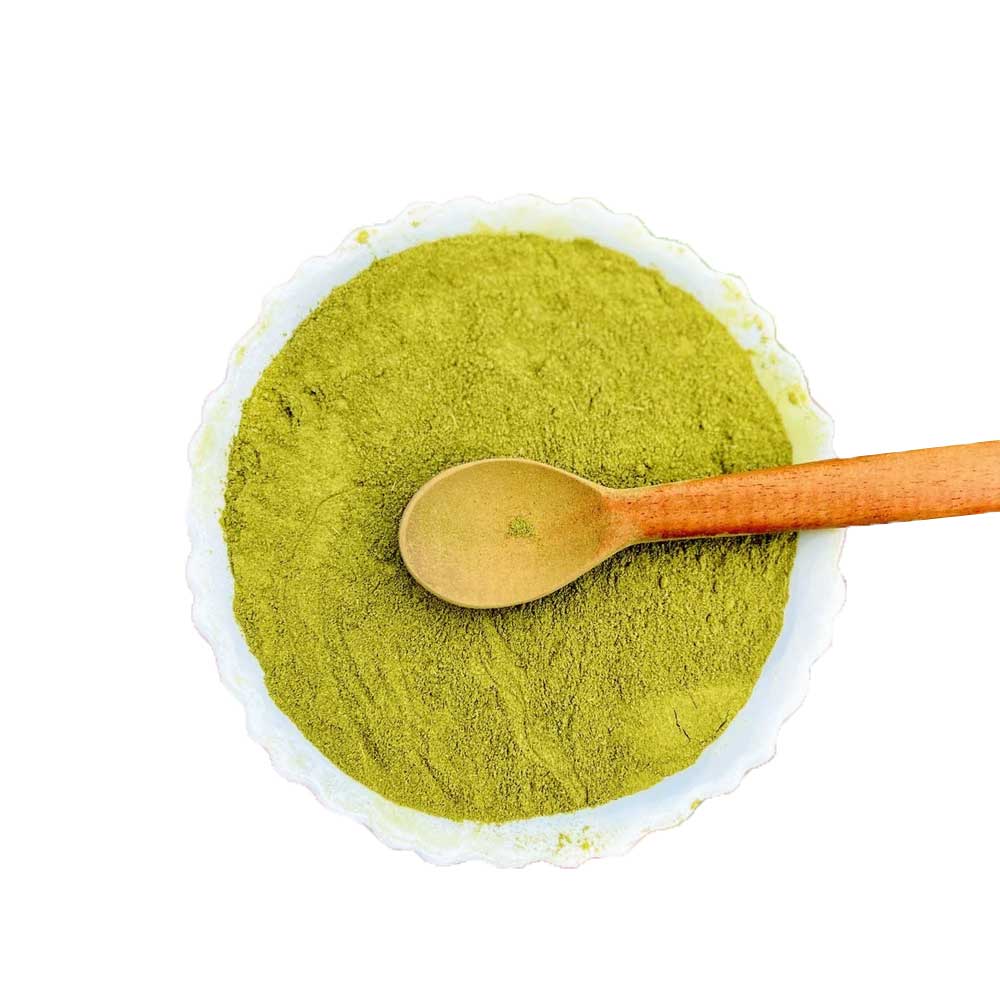
Moringa powder comes from the leaves of Moringa oleifera, a tree native to north-western India and widely cultivated across the tropics. The leaves have a green earthy taste reminiscent of spinach or matcha and are used as a nutrient-dense plant food in drinks and meals.
Shipping options
- EU countries: DHL from €18 · free over €200 (first 2 kg, by volumetric weight)
- Cyprus: ACS, BOX NOW or DHL · free with ACS or BOX NOW over €99
- Greece: ACS or ELTA to your door from €4.00 · ACS or BOX NOW lockers from €2.40 · free over €49 (first 3 kg)
- Usually dispatched within 1–2 business days
Payment methods
- Card, Google Pay, Apple Pay, with no extra charge
- Cash on delivery (Cyprus and Greece): ACS +€2.50 · ELTA +€3.50
- IRIS or bank transfer (Greece only)
Send us a message and we reply within one working day. Or call us on (+30) 2610 221354 during shop hours.
Send a message(+30) 2610 221354What it is
Moringa powder comes from the leaves of Moringa oleifera, a tree native to north-western India and widely cultivated across the tropics. The leaves have a green earthy taste reminiscent of spinach or matcha and are used as a nutrient-dense plant food in drinks and meals.
The name “miracle tree” reflects the many traditional uses of the whole tree. Nutritionally, leaves provide protein, carotenoids, vitamins, minerals and polyphenols, without single-handedly supplying every requirement of a complete diet.
Key properties
Characteristic nutrients include protein, beta-carotene, B vitamins, vitamin C, calcium, iron and antioxidant polyphenols. Leaves also contain glucosinolates and isothiocyanates studied in metabolic and inflammatory pathways.
Composition changes with soil, drying and batch. The powder is useful as a complementary food rather than the sole source of protein or micronutrients.
Uses
Dietary, traditional and research-related references include:
- energy, concentration and physical stamina
- additional plant protein for muscle tissue
- cholesterol and lipids as metabolic research areas
- glucose and insulin sensitivity in early studies
- immune function through the nutritional and antioxidant profile
- stress response and everyday vitality
- digestion and metabolism within balanced nutrition
- fullness and support for a weight-loss programme
- traditional galactagogue use for breast-milk production
- liver and kidney protective mechanisms in preclinical research
- vision and dental health through carotenoids and minerals
- antibacterial properties and topical skin care
- traditional libido and reproductive wellness across several cultures.
Athletes and active people use moringa as a food before or after training, while improvements in stamina and muscle mass depend primarily on total protein, energy, sleep and exercise.
Preparation & dosage
Daily use: mix 1 teaspoon into water, a plant drink, juice or a smoothie. It can also be added to yoghurt, soup, sauce, pesto or cooked food. Pair with apple, banana, lemon, ginger or cocoa to balance the taste. Avoid prolonged boiling when seeking to preserve more of the heat-sensitive nutrient profile.
The quantities are indicative and based on traditional use and published herbal medicine literature. For extended use or while taking medication, consult a healthcare professional.
Precautions
Avoid during pregnancy. During breastfeeding, traditional galactagogue use requires professional guidance for both mother and infant. Use care with anticoagulant, glucose-lowering and blood-pressure medicines because nutrient composition and metabolic effects may influence monitoring. Large amounts may cause nausea, diarrhoea or abdominal discomfort.
Frequently asked questions
What does moringa powder taste like?
Green and earthy, similar to spinach or matcha. Fruit, lemon or cocoa balances it easily.
How is it used every day?
Begin with 1 teaspoon in a smoothie, juice, yoghurt, soup or another food.
Does it replace a balanced diet?
No. It is a nutrient-dense complementary food used within varied nutrition with adequate protein and energy.
- Anwar, F., Latif, S., Ashraf, M., & Gilani, A. H. (2006, November 6). Moringa oleifera: A food plant with multiple medicinal uses. Phytotherapy Research, 21, 17-25
- Waterman, C., Rojas‐Silva, P., Tumer, T. B., Kuhn, P., Richard, A. J., Wicks, S., ... Raskin, I. (2015, April 17). Isothiocyanate‐rich Moringa oleifera extract reduces weight gain, insulin resistance, and hepatic gluconeogenesis in mice [Abstract}. Molecular Nutrition & Food Research, 59(6), 1013–1024
- Tahir, K., Mugal, M. T., & Haq, I. U. (2010). Moringa oleifera: A natural gift-A review [Abstract]. Journal of Pharmaceutical Sciences and Research, 2(11), 775–781
- Cheenpracha, S., Park, E. J., Yoshida, W. Y., Barit, C., Wall, M., Pezzuto, J. M., … Chang, L. C. (2010, September 1). Potential anti-inflammatory phenolic glycosides from the medicinal plant Moringa oleifera fruits [Abstract]. Bioorganic & Medicinal Chemistry, 18(17), 6598–6602
- Debnath, S., Biswas, D., Ray, K., & Guha, D. (2011, January 15). Moringa oleifera induced potentiation of serotonin release by 5-HT 3 receptors in experimental ulcer model [Abstract]. Phytomedicine, 18(2–3), 91–95
- Ganguly, R., & Guha, D. (2008, December 1). Alteration of brain monoamines & EEG wave pattern in rat model of Alzheimer’s disease & protection by Moringa oleifera [Abstract]. Indian Journal of Medical Research, 128(6), 744–751
Reviews
Have you tried Moringa leaf powder? Tell us what you think.