 Zoom
Medicinal & Therapeutic Herbs
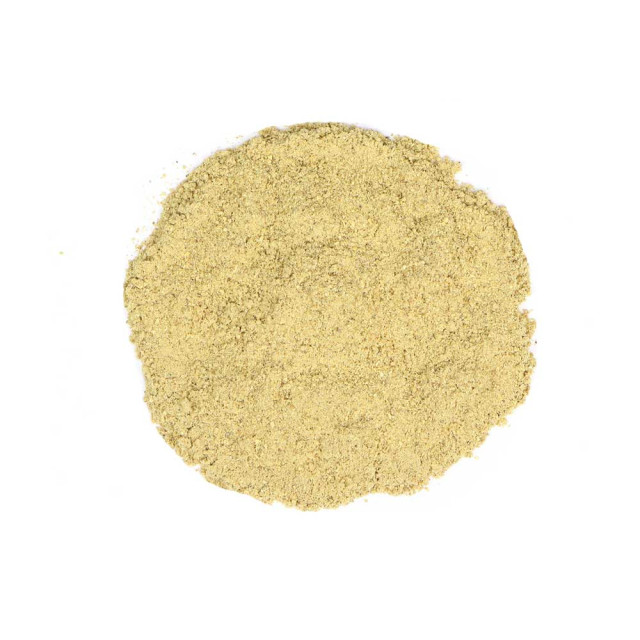
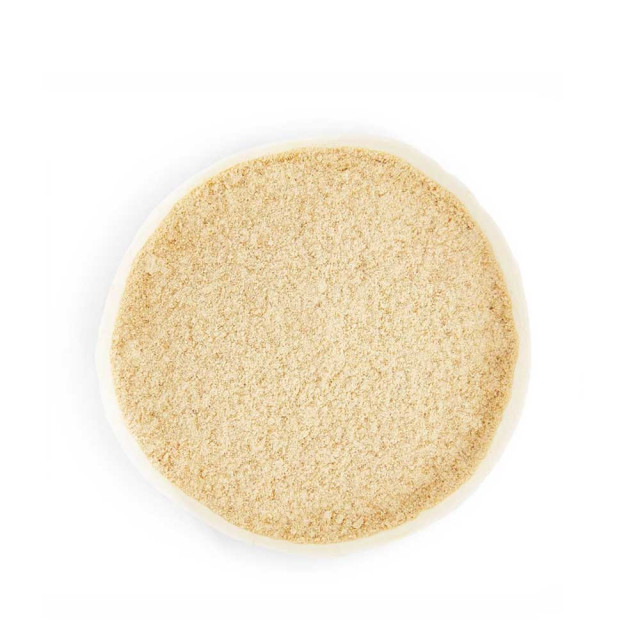
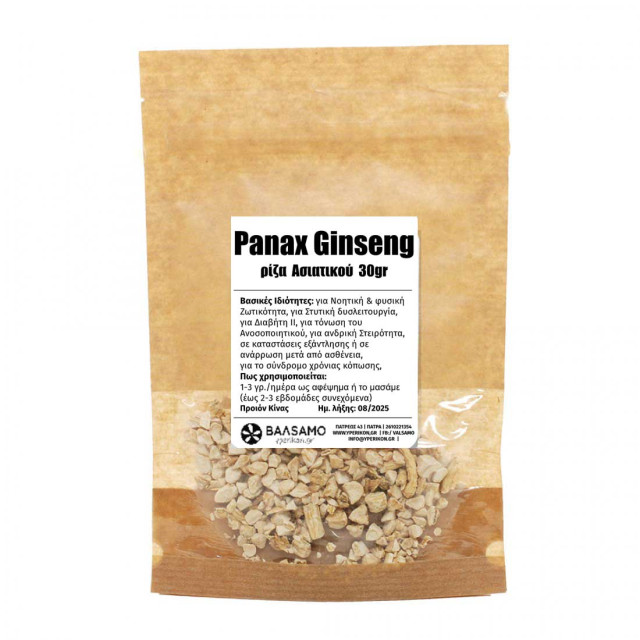
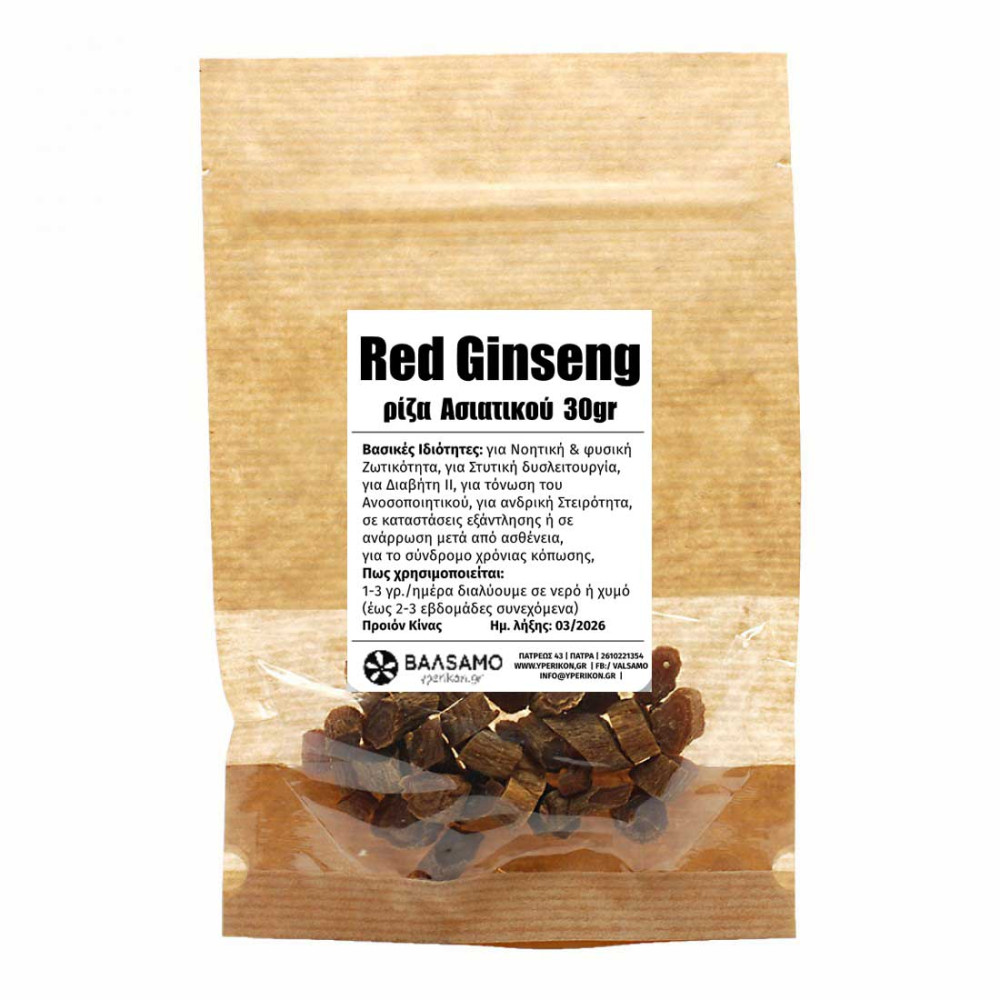
Red Panax ginseng chopped root 30 g
Also known as: red ginseng, Asian ginseng, Korean ginseng, kokkino tzinseng.
Red ginseng comes from mature Panax ginseng root that has been steamed and dried, producing a ginsenoside profile different from white ginseng. It is a classic East Asian adaptogen and tonic.
Shipping options
- EU countries: DHL from €18 · free over €200 (first 2 kg, by volumetric weight)
- Cyprus: ACS, BOX NOW or DHL · free with ACS or BOX NOW over €99
- Greece: ACS or ELTA to your door from €4.00 · ACS or BOX NOW lockers from €2.40 · free over €49 (first 3 kg)
- Usually dispatched within 1–2 business days
Payment methods
- Card, Google Pay, Apple Pay, with no extra charge
- Cash on delivery (Cyprus and Greece): ACS +€2.50 · ELTA +€3.50
- IRIS or bank transfer (Greece only)
Send us a message and we reply within one working day. Or call us on (+30) 2610 221354 during shop hours.
Send a message(+30) 2610 221354What it is
Red ginseng comes from mature Panax ginseng root that has been steamed and dried, producing a ginsenoside profile different from white ginseng. It is a classic East Asian adaptogen and tonic.
Chinese tradition considers it more warming and yang than white ginseng. Modern research examines fatigue, physical endurance, cognition, stress, immune function, sexual function and glucose metabolism.
Key properties
Adaptogenic. Supports the neuroendocrine stress response, endurance and recovery from fatigue.
Physical and mental tonic. Used for energy, work, exercise, concentration and mental performance.
Immunomodulatory and antioxidant. Ginsenosides have been studied for immune markers, oxidative stress and inflammation.
Metabolic. It may lower glucose, while blood-pressure effects vary by person, amount and timing.
Uses
The root is used in cycles rather than as an uninterrupted stimulant. Human studies involve different extracts, forms and durations.
- Fatigue, stress and energy. Traditionally and experimentally associated with endurance, weakness, tiredness and physical performance.
- Memory and brain function. Studies have examined cognition, attention and mental performance, with mixed results.
- Erectile function and libido. Systematic reviews have evaluated ginseng for erectile dysfunction and sexual wellbeing.
- Immune function and viruses. Immunomodulatory character and antiviral mechanisms have been studied without a general promise of avoiding infections.
- Blood sugar. Meta-analyses have examined glycaemic control. The direction of effect may be lower glucose.
- Heart and blood pressure. Cardiovascular markers have been examined, but red ginseng may cause palpitations or blood-pressure change in some people.
- Cancer. Anticancer activity remains mainly a preclinical and epidemiological research field and does not establish clinical use.
Preparation & dosage
For a decoction, use 1–2 g of chopped root in total daily, simmer for 10–15 minutes and strain.
Prefer morning or midday intake. Recorded cyclical use is two to three weeks followed by a one- to two-week break.
Amounts are indicative and are based on traditional use and published herbal literature. For prolonged use or when taking medication, consult a healthcare professional.
Precautions
It may cause insomnia, nervousness, headache, gastrointestinal discomfort, palpitations or blood-pressure changes. Avoid evening intake and combining it with large amounts of caffeine.
Monitor glucose with antidiabetic medication. It may reduce warfarin activity and interact with stimulants or MAO inhibitors. Avoid during pregnancy, breastfeeding and childhood without specialist advice.
Frequently asked questions
How do red and white ginseng differ?
They come from the same species, but red ginseng is steamed before drying and has a different ginsenoside profile.
When is red ginseng taken?
Morning or midday is preferred because evening intake may disturb sleep.
Is it used continuously?
Recorded practice uses two- to three-week cycles followed by a one- to two-week break.
- Shishtar E, Sievenpiper JL, Djedovic V, et al. The effect of ginseng (the genus panax) on glycemic control: a systematic review and meta-analysis of randomized controlled clinical trials.
- Potentiation of antioxidative and anti-inflammatory properties of cultured wild ginseng root extract through probiotic fermentation
- Szczuka D, Nowak A, Zakłos-Szyda M, et al. American ginseng (Panax quinquefolium L.) as a source of bioactive phytochemicals with pro-health properties. Nutrients. 2019
- Ginseng for cognition, Cochrane Database Syst Rev 2010 Dec 8
- Ernst E, Posadzki P, Soo Lee M. Complementary and alternative medicine (CAM) for sexual dysfunction and erectile dysfunction in older men and women: an overview of systematic reviews. Maturitas. 2011
- NIH. National Center for Complementary and Integrative Medicine. Asian ginseng. Updated September 2016.
- Sellami M, Slimeni O, Pokrywka A, et al. Herbal medicine for sports: a review. J Int Soc Sports Nutr. 2018
Reviews
Have you tried Red Panax ginseng chopped root 30 g? Tell us what you think.