Powdered extract
200 to 300 mg per day, an amount equal to the tip of a small spoon. Start with a smaller dose for the first few days. Taken once a day, in the morning or early in the day.

 −13% Zoom
Medicinal & Therapeutic Herbs
Also known as: shilajit, mumijo, mineral pitch, salajeet, asphaltum punjabianum, shilajatu.
Shilajit is a natural resinous substance formed over many centuries in the cracks of mountain rock, mainly in high-altitude regions such as the Himalayas.
Send us a message and we reply within one working day. Or call us on (+30) 2610 221354 during shop hours.
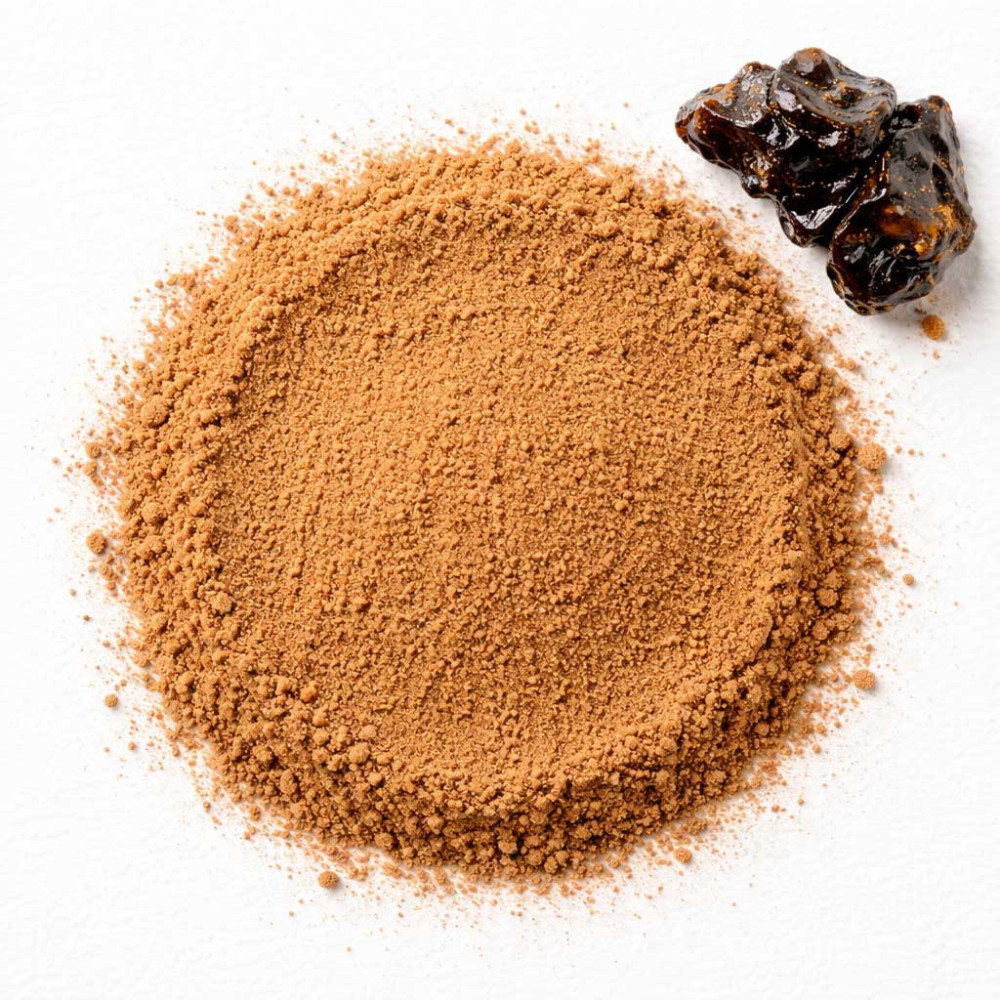
Send a message(+30) 2610 221354Shilajit is a natural resinous substance formed over many centuries in the cracks of mountain rock, mainly in high-altitude regions such as the Himalayas. It arises from the slow decomposition of plant and microbial matter under particular natural conditions, producing a rich mixture of organic and inorganic components — chiefly humic and fulvic acids and over 80 trace elements and minerals. It is traditionally used in Ayurvedic medicine. In powder form it has been purified and processed so that it retains its active components without additives or fillers, while being more practical to use and dose.
Adaptogen, energy tonic, antioxidant, anti-inflammatory, neuroprotective. Shilajit is not a plant extract but a phyto-mineral concentrate with a unique composition, incorporating organic substances such as fulvic acid together with minerals. The presence of fulvic acid is among its most valuable features: it can improve the absorption of nutrients, act as an antioxidant and contribute to the body's overall balance. Shilajit has been studied for its capacity to support energy production at the cellular level and reduce the sensation of fatigue.
For low energy and fatigue, chronic fatigue syndrome, reduced cognitive function and memory; for male reproductive health and testosterone levels; for iron-deficiency anaemia; for bone density in post-menopausal women; for cardiovascular health; for anti-ageing and longevity. It suits people with demanding daily lives and high energy requirements, those seeking steady support for physical performance without caffeine, and those wanting to invest in general wellbeing.
Daily, once a day, dissolved in lukewarm water, a herbal infusion or honey. Unlike products that give an instant jolt, shilajit works at the level of the cell and metabolism — helping the body make better use of energy, nutrients and its own performance mechanisms. Its action is assessed after weeks of regular use, not immediately.
In Ayurvedic tradition it is combined with ashwagandha for energy and stress resilience, and with gokshura (tribulus) for male reproductive health. For cognitive focus with brahmi. In anaemia it is traditionally accompanied by vitamin C-rich foods for better iron absorption.
Name: Shilajit — not a plant species but a phyto-mineral exudate
Category: mineral pitch of plant and microbial origin, formed in the cracks of mountain rock
Other names: shilajit, mumijo, salajeet, mineral pitch, asphaltum punjabianum, shilajatu
Origin: high-altitude mountain regions, chiefly the Himalayas
Standardisation: powdered extract with 20% fulvic acid, purified, without additives or fillers
Characteristic constituents: fulvic acid (20%), humic acids, dibenzo-α-pyrones, over 80 trace elements and minerals, amino acids
Historical note: Shilajit is described in the classical Ayurvedic literature, in the Charaka Samhita and the Sushruta Samhita, as a rasayana — a preparation of rejuvenation and longevity. The Sanskrit name translates roughly as "conqueror of mountains". A parallel tradition exists in Central Asia and Russia under the name "mumijo", where it was studied systematically by Soviet research groups.
200 to 300 mg per day, an amount equal to the tip of a small spoon. Start with a smaller dose for the first few days. Taken once a day, in the morning or early in the day.
In lukewarm water, a herbal infusion or honey. Avoid very hot liquid, as high temperatures degrade the organic acids.
Cycles of 8–12 weeks with a 2–4 week break. The adaptogenic profile is assessed after at least 4–6 weeks of regular use.
The amounts given are indicative, based on traditional use and published phytotherapy literature. For prolonged use or if you are on medication, consult a qualified health professional.
Use only in purified form. Raw shilajit may contain heavy metals (lead, arsenic, mercury), mycotoxins and free radicals — which is why provenance and laboratory testing are decisive. Not recommended in pregnancy, breastfeeding, for children or for people with iron overload (haemochromatosis, thalassaemia, sickle cell anaemia), as it raises iron levels. Caution is required in hormone-dependent conditions given its effect on testosterone. In gout it may raise uric acid. If you are on medication — particularly antihypertensives, antidiabetics and iron preparations — seek advice from a health professional. Stop use if discomfort occurs.
200 to 300 mg per day — an amount equal to the tip of a small spoon. It dissolves in lukewarm water, a herbal infusion or honey, once a day, in the morning or early in the day. Start with a smaller dose for the first few days.
Because high temperatures degrade the organic acids, chiefly fulvic acid, which is the main active component. Lukewarm liquid dissolves the extract just as well without that loss.
Pregnant and breastfeeding women, children, and people with iron overload — haemochromatosis, thalassaemia, sickle cell anaemia — since it raises iron. Caution is also needed in hormone-dependent conditions and in gout.
Have you tried Shilajit extract powder 20% fulvic acid 80 g? Tell us what you think.