Infusion in a cup
1 tsp of leaves per 250 ml cup, in water at 90°C for 7–10 minutes. Good for 1–2 infusions.

 Zoom
Herbal Tea
Ilex paraguariensis A. St.-Hil.
Also known as: Yerba Mate, Paraguay Tea, St. Bartholomew's Tea.
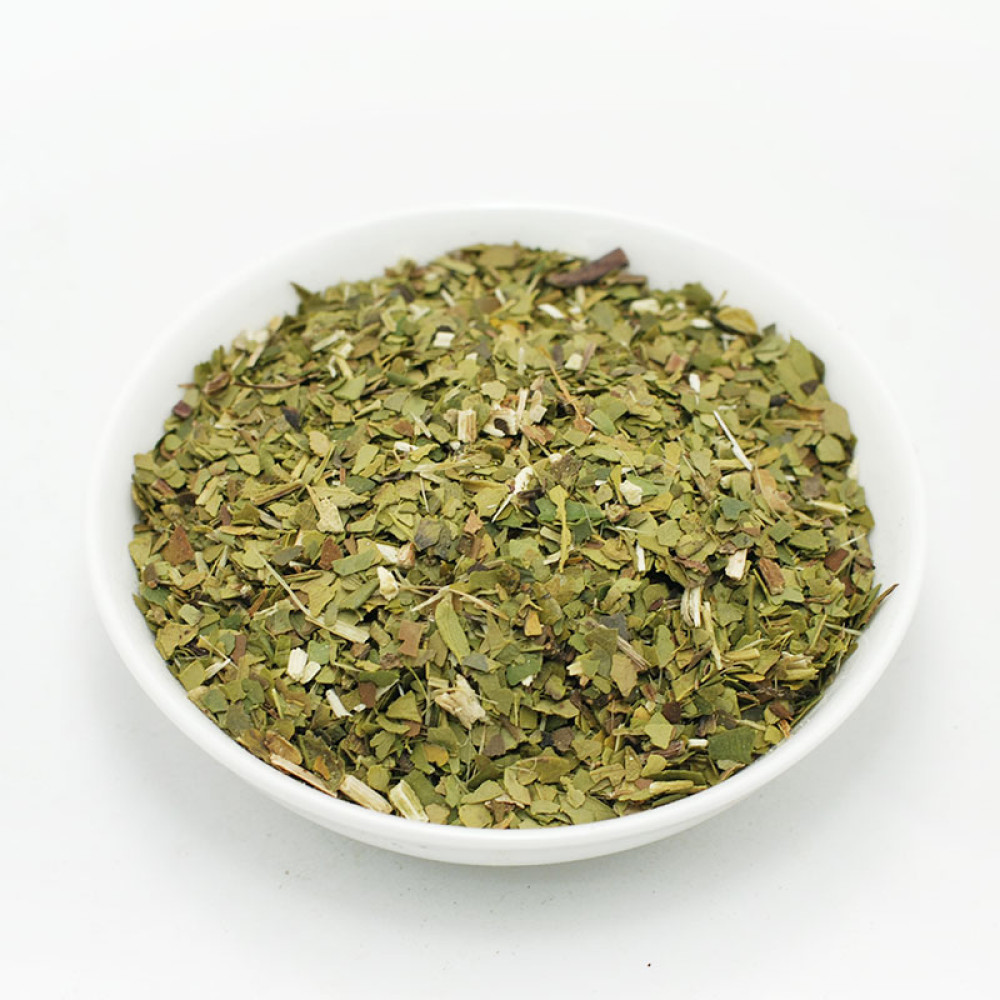
Mate is an evergreen tree of the Aquifoliaceae family, native to the subtropical forests of South America. The dried, broken leaves are the part used, here in loose form.
Send us a message and we reply within one working day. Or call us on (+30) 2610 221354 during shop hours.
Send a message(+30) 2610 221354Mate is an evergreen tree of the Aquifoliaceae family, native to the subtropical forests of South America. The dried, broken leaves are the part used, here in loose form.
It is the national drink of Argentina, Uruguay, Paraguay and Chile. It is served in a dried gourd — which carries the same name, mate — and drawn through a metal straw, the bombilla. People hold it for hours, and the same charge of leaves is refilled many times over.
The leaves are naturally rich in caffeine and theobromine — mate is among the few plants carrying both xanthines, theobromine being the same compound found in cocoa.
They also contain polyphenols, flavonoids, saponins, carotene and 15 amino acids, along with vitamins A, C, E, B1, B2, B5 and niacin and the minerals calcium, magnesium, iron, selenium, phosphorus and zinc. The antioxidant capacity of the infusion has been measured slightly above that of green tea.
On caffeine, mate sits between coffee and tea: less than a cup of coffee, more than a cup of tea. The substance once called "mateine" is caffeine itself.
Traditionally associated with stimulation, energy, mental focus, physical performance and metabolism.
In South America mate is drunk through the day and often takes the place of coffee. It is regarded as a drink that keeps you alert without the sharp peak of coffee.
The plant has been studied along several lines. In a trial with exercising subjects, its ingestion was examined in relation to fat oxidation and energy expenditure during exercise. Aqueous extracts have been examined as a natural antimicrobial against Escherichia coli. Its saponins, together with quercetin, have been studied in cell models with respect to the iNOS and COX-2 enzymes. An aqueous extract has been examined in rabbits in relation to the progression of atherosclerosis and cholesterol levels, and in mice in relation to body weight and blood sugar control. These are preclinical findings; further research in humans is needed.
In traditional folk use, the infusion was also applied externally to skin and scalp, for dandruff and dryness.
1 tsp of leaves per 250 ml cup, in water at 90°C for 7–10 minutes. Good for 1–2 infusions.
Fill the gourd two thirds with leaves, tilt it so the leaves gather to one side, wet them first with lukewarm water and let them swell. Insert the bombilla and top up with water at up to 80°C, never boiling. The same charge is refilled many times, until the flavour fades.
Quantities are indicative and based on traditional use and published herbal literature. For prolonged use, or if you are on medication, consult a healthcare professional.
In South America mate is often taken with mint or lemon verbena, while in Paraguay it is served cold as tereré with lemon and aromatic herbs. Modern blends pair it with hibiscus, lemongrass and rosehip.
Less than a cup of coffee and more than a cup of tea. The substance once called "mateine" is caffeine itself.
No. It works perfectly well as a plain infusion in a cup, 1 tsp at 90°C for 7–10 minutes. The gourd is the traditional ritual, not a requirement.
Loose leaves are made for infusion and are refilled many times. The powder dissolves directly and suits smoothies, milk drinks and recipes.
Have you tried Mate loose leaf? Tell us what you think.
6.70€
7.45€50 g · 3 weights
3.62€100 g · 2 weights
4.50€100 g · 2 weights