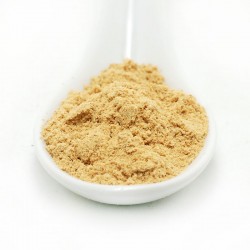
The legend of Amaranth can be traced back to the time of the Incas, who believed that the seed possessed supernatural powers. For four centuries, no one spoke about it until scientists rediscovered it through studies and confirmed that the tiny Amaranth seeds contain a significant number of key benefits.
What is great about Amaranth is its unusually high levels of lysine. This makes Amaranth protein extremely valuable and has been found to benefit metabolism as well as being linked to slowing down aging. Athletes in particular are aware of lysine because it makes a lot of carnitine. And this in turn can benefit energy balance and endurance.
It's not just athletes who benefit from these miraculous seeds. Even astronauts take them with them into space! A good idea is to compare the proteins of Amaranth with those of conventional cereals, to understand how valuable they are. Amaranth is also rich in safe fatty acids, of which the main ones are the high quality linolenic acids which have been found to benefit the body in terms of optimal performance and well-being. In addition, Amaranth is known to contain the minerals magnesium and iron, along with calcium, at levels that can contribute to the body's daily needs for these minerals. Anyone interested in learning about all the benefits of using this miraculous Incan seed, in a healthy and enjoyable way, will be able to discover these and much more about this wonderful food.
In the Inca and Aztec cultures - Amaranth was considered a sacred plant - it was attributed with longevity properties. Amaranth was an ideal source of energy for the Indians of the highlands, who had to face journeys of more than 40km each time. Near the port of Vera Cruz in the famous Oxcatlan caves, Amaranth was found among the funerary objects dating back between 6,700 and 5,000 BC.
Characteristically, the color of the Amaranth flowers is bright red, so it is also an ornamental plant. Some types called "foxtails" can be found in gardens in Germany. In general, today there are more than 900 types and 60 species. In addition to corn and beans, Amaranth was one of the staple foods of the Incas of Peru and the Aztecs of Mexico. Their goal was to improve the harvest each time. Unlike other seeds, this is not achieved by increasing the size of the seed and endosperm, but by increasing the number of seeds per plant. By doing this, they had a significant advantage from which we still benefit in terms of yield and nutritional benefits.
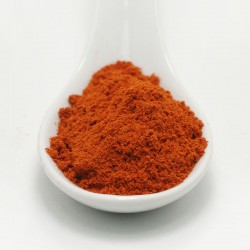
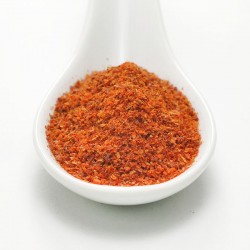
Chili pepper (Capsicum frutescus), Cayenne pepper, red hot chilly pepper Other Names: Red hot pepper, pepper, cayenne By the term Chili and Cayenne we..
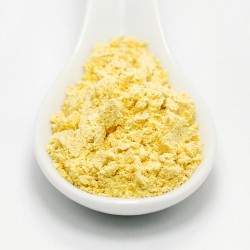
Mustard powder (Sinapis alba,nigra), Mustard Other Names: Mustard flour, white or yellow and black mustard It is the ground mustard seed. In fact, the..
Bell pepper Bukovo comes from the well-known red pepper of the genus Capsicum annum, usually a hot variety but also sweet. The fruits are dried and th..
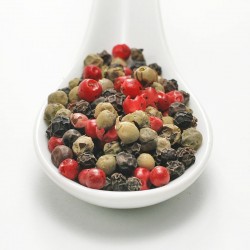
Mixed peppers A mixture of black, green, pink and white pepper in appropriate proportions. Use it to give a combination of aromas and spicy flavor to ..
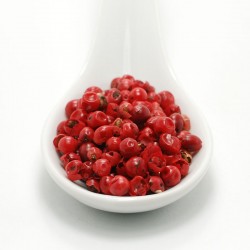
Pink pepper (Schinus terebinthifolius), Pink pepercorns Other Names: bell pepper, Brazilian pepper It is not related to the pepper family but to the s..
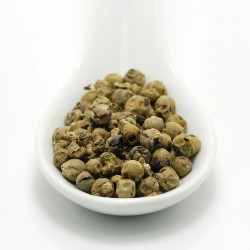
Green pepper (Piper nigrum), green pepper Other Names: black pepper, green pepper, white pepper Black, white and green pepper are the fruit of the sam..
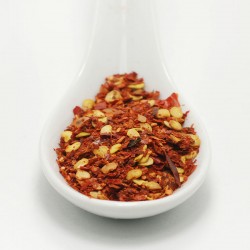
Extra hot chili pepper (Capsicum frutescus), Kayen pepper, red hot chilly pepper Other Names: Red hot pepper, pepper, cayenne Chili powder from extra ..