





- Stock: In Stock
- Model: ΒΙΟ-365
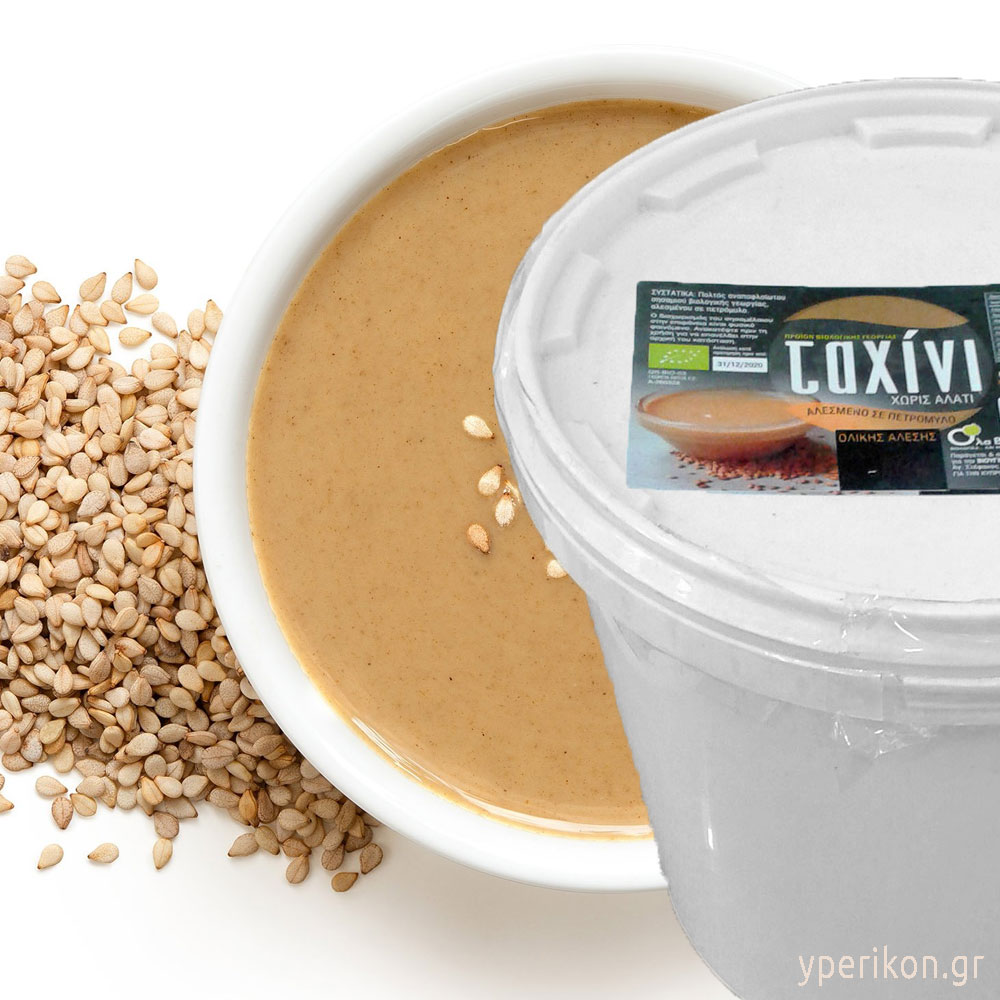
ORGANIC whole grain TACHINI (stone-milled) 5 kg package...... nutritious & fasting.
Greek product of organic farming.
Tahini is a paste made from roasted, ground sesame seeds. It has a light nutty flavor. It is best known as an ingredient in hummus, but is widely used in many dishes around the world, particularly in Mediterranean and Asian cuisine. In addition to its culinary uses, tahini offers many health benefits.
Tahini is a delicious way to add powerful antioxidants and healthy fats to your diet, as well as several vitamins and minerals . It has antioxidant and anti-inflammatory properties , and its health benefits may include reducing risk factors for heart disease and protecting brain health .
Overall, tahini is a simple, healthy, and flavorful addition to your diet.
How Tahini is a nutritional treasure for your body
It is extremely nutritious
Tahini is packed with healthy fats, vitamins, and minerals. In fact, just 1 tablespoon (15 grams) provides more than 10% of the Recommended Daily Intake (RDI) for some nutrients.
One tablespoon (15 grams) of tahini contains the following:
- Calories: 90 calories
- Protein: 3 grams
- Fat: 8 grams
- Carbohydrates: 3 grams
- Fiber: 1 gram
- Thiamine: 13% of the RDI
- Vitamin B6: 11% of the RDI
- Phosphorus: 11% of the RDI
- Manganese: 11% of the RDI
Tahini is an excellent source of phosphorus and manganese , which play a vital role in bone health . It is also high in thiamine (vitamin B1) and vitamin B6, which are important for energy production . Additionally, about 50% of the fat in tahini comes from monounsaturated fatty acids. These have anti-inflammatory properties and have been linked to a reduced risk of chronic diseases.
Rich in antioxidants
Tahini contains antioxidants called lignans , which help prevent free radical damage in your body and may reduce your risk of disease.
May reduce the risk of certain diseases
Eating sesame seeds may reduce the risk of certain conditions, such as type 2 diabetes and heart disease. Doing so may also reduce risk factors for heart disease , including high cholesterol and triglyceride levels.
May have antibacterial properties
Tahini and sesame seeds may have antibacterial properties due to the powerful antioxidants they contain. In fact, in some Central European and Middle Eastern countries, sesame oil is used as a home remedy for foot ulcers related to diabetes.
Contains anti-inflammatory compounds
Certain compounds in tahini are particularly anti-inflammatory. While short-term inflammation is a healthy and normal response to injury, chronic inflammation can be detrimental to your health. Animal studies have found that sesamin and other antioxidants in sesame may relieve inflammation and pain associated with injury, lung disease, and rheumatoid arthritis . Sesamin has also been studied as a potential treatment for asthma , a condition characterized by inflammation of the airways.
It can strengthen your central nervous system
Tahini contains compounds that may improve brain health and reduce the risk of developing neurodegenerative diseases like dementia.
May provide anticancer effects
Sesamin and sesamol — the two main antioxidants in sesame seeds — have been studied extensively for their anticancer potential. Some test-tube studies have shown that sesame antioxidants promote the death of colon, lung, liver, and breast cancer cells.
Helps protect liver and kidney function
Tahini contains compounds that may help protect your liver and kidneys from damage. These organs are responsible for removing toxins and waste from your body.
Indicative bibliography
- Effects of the Intake of Sesame Seeds (Sesamum indicum L.) and Derivatives on Oxidative Stress: A Systematic Review
- Value addition in sesame: A perspective on bioactive components for enhancing utility and profitability
- Sesamin protects SH-SY5Y cells against mechanical stretch injury and promoting cell survival
- Effects of sesame seed supplementation on lipid profile and oxidative stress biomarkers in patients with knee osteoarthritis
- Ardeh (Sesamum indicum) could improve serum triglycerides and atherogenic lipid parameters in type 2 diabetic patients: a randomized clinical trial
- Evaluation of Wound Healing Properties of Grape Seed, Sesame, and Fenugreek Oils
- Antinociceptive and anti-inflammatory activities of the sesame oil and sesamin
- Sesamin Attenuates Lipopolysaccharide-Induced Acute Lung Injury by Inhibition of TLR4 Signaling Pathways
- Sesamin attenuates allergic airway inflammation through the suppression of nuclear factor-kappa B activation
- Water-soluble fractions from defatted sesame seeds protect human neuroblast cells against peroxyl radicals and hydrogen peroxide-induced oxidative stress
- White sesame seed water-soluble fraction enhances human neuroblast cell viability via an anti-apoptotic mechanism
- A comprehensive review on the anti-cancer properties and mechanisms of action of sesamin, a lignan in sesame seeds (Sesamum indicum)